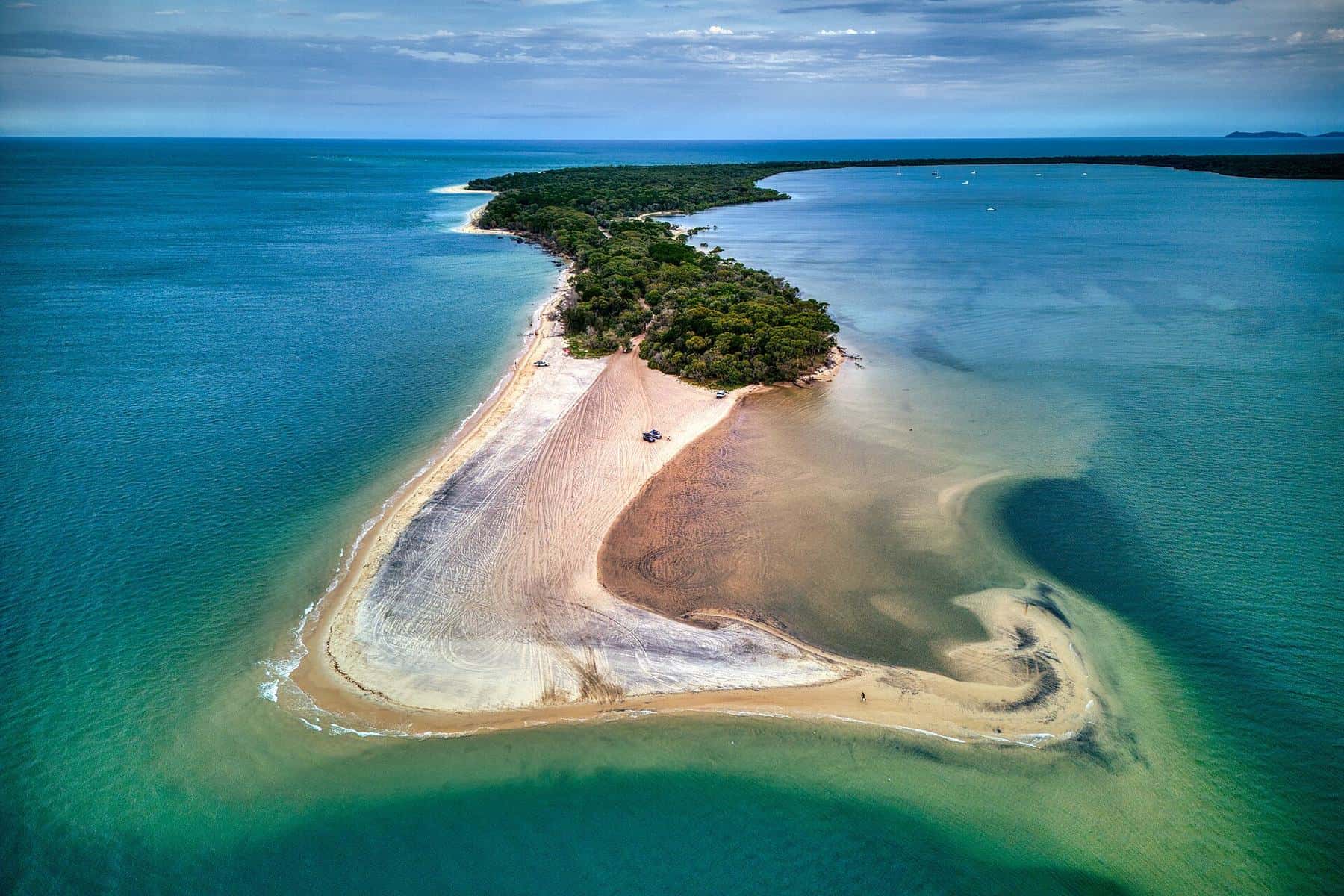
Inskip Point is where the mainland runs out. North of Rainbow Beach, the coast narrows into the Inskip Peninsula, a strip of sand and casuarina forest that ends just a few hundred metres from Hook Point, the southern tip of K’gari. On the eastern side, ocean beach faces the surf of Wide Bay. On the western side, sheltered water flows into Tin Can Bay and the Great Sandy Strait. It is one of the most popular camping areas in Queensland and the main jumping-off point for K’gari.
~10 min
Barge to K’gari
Inskip Point to Hook Point
Permits
Camping and driving
Book with QPWS
2015
Large sand collapse
Campground partly lost
Getting there
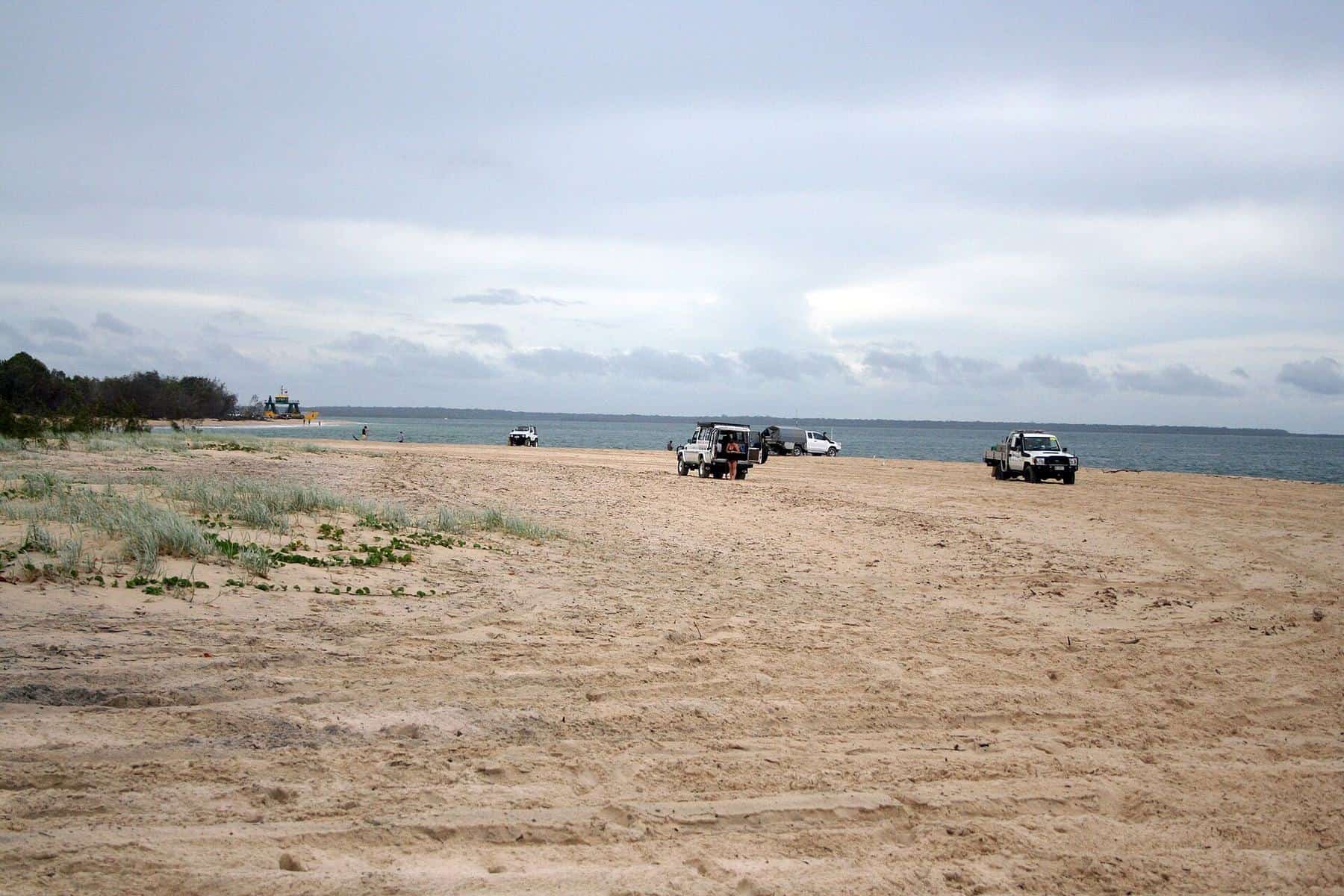
From Rainbow Beach, Inskip Avenue heads north out of town towards the peninsula. The sealed road ends and the sand tracks begin. You need a 4WD for the camping areas and beaches, and a QPWS vehicle access permit for driving on the Inskip Peninsula. Lower your tyre pressures to suit the soft sand before you leave the bitumen, and reinflate when you return. Read our beach driving guide.
The barge to K’gari
Vehicle barges cross from Inskip Point to Hook Point. QPWS describes the trip as about 10 minutes, with services generally running from early morning to late afternoon. Barges usually run continuously without bookings, but check with operators for current times and fares. On K’gari you need a separate vehicle access permit, and the beach and inland tracks are 4WD-only. See our K’gari guide.
Arrive on a falling tide if you plan to drive the beach on K’gari straight away. The southern beaches around Hook Point can be soft and narrow around high tide.
Camping at Inskip
QPWS manages several camping areas along the peninsula, set among casuarinas and banksias behind the beach and along the sheltered western shore. Sites must be booked in advance, and they fill quickly in school holidays and on long weekends. Facilities are basic. Bring your own water, a portable toilet where required, and everything you need to take your rubbish out.
Camping here means sharing the space with wildlife. Store all food, rubbish and fishing bait in vehicles or secure containers. Wongari are regularly seen.
Safety: sand collapses
The peninsula is made of loose, constantly shifting sand. In September 2015, a large section of shoreline at a campground near the point collapsed into the water overnight, swallowing a car, a caravan, a camper trailer and tents. ABC News reported that an engineer described the 200-metre-wide, 7.5-metre-deep cavity as a possible near-shore landslide. No one was seriously injured, but campers were evacuated and campgrounds closed. Further collapses have occurred since.
QPWS monitors the area and may close sections of the peninsula. Obey all signs and closures, avoid camping close to steep or undercut banks near the point, and check park alerts before you go.
Safety: wongari (dingoes)
Wongari are wild animals and can be dangerous. QPWS’s dingo-safe advice includes:
- Always stay within arm’s reach of children.
- Walk in groups and carry a stick.
- Never feed wongari, and never leave food, rubbish or bait unattended.
- If a wongari approaches, stand still at your full height, fold your arms, face the animal and back away calmly.
- Report negative encounters to QPWS.
Fishing, swimming and birdlife
The beaches and channel at Inskip are popular for fishing. Tailor, whiting, dart and flathead are common targets. The area is within the Great Sandy Marine Park, so check zoning and bag limits. Strong currents run through the channel between Inskip and Hook Point, so swimming there is dangerous. If you want to cool off, choose calm, shallow water on the western side and supervise children.
Inskip is also good for birdwatching. Beach stone-curlews, migratory shorebirds and the noisy pitta are among the species recorded on the peninsula.
Inskip camping checklist
0 of 7 done
Ticks are saved in this browser only.
Inskip without a 4WD
You can still enjoy the peninsula without a four-wheel drive. The sealed road runs part of the way along Inskip Avenue, with views over the water. You can also join a guided tour that crosses to K’gari, or take a boat trip on Tin Can Inlet. For the camping areas and beaches, though, a 4WD is essential.
Leave no trace
Inskip is popular, and its campgrounds take a battering in busy periods. Help keep it beautiful. Take all rubbish out with you, including food scraps, which attract wongari. Use portable toilets where they are required, and dispose of waste at designated dump points. Collect firewood only where permitted, or bring your own, and observe any fire bans. Stay on existing tracks to protect the dunes and vegetation, and keep vehicles off the foredunes, which hold the peninsula together.
Nearby
Cross to K’gari, head back to Rainbow Beach for supplies, or go west to Tin Can Bay.
Frequently asked questions
How do you get from Inskip Point to K’gari?
Vehicle barges run across the narrow channel from Inskip Point to Hook Point on the southern tip of K’gari. QPWS describes the crossing as taking about 10 minutes, with services generally running from early morning to late afternoon. You also need a K’gari vehicle access permit.
Do you need a permit to camp at Inskip Point?
Yes. Camping at Inskip Point is managed by QPWS, and you must book a camping permit in advance. A vehicle access permit is also required to drive on the Inskip Peninsula beaches.
Are there dingoes at Inskip Point?
Yes. Wongari (dingoes) are regularly seen at Inskip Point. Never feed them, keep children within arm’s reach, store food and rubbish securely, and walk in groups.
What happened at Inskip Point in 2015?
In September 2015 a large section of the shoreline collapsed into the water at a campground, taking vehicles, a caravan and tents. No one was seriously hurt. Further collapses have occurred, and QPWS closes affected areas when needed.
Sources and further reading
Facts on this page were checked against these primary and official sources. Conditions change — confirm before you travel or buy.
- Inskip Peninsula Recreation Area — Queensland Parks and Wildlife Service
- K’gari — getting there and getting around — Queensland Parks and Wildlife Service
- Inskip sinkhole possibly a near-shore landslide, engineer says — ABC News
- Be dingo-safe — Queensland Parks and Wildlife Service