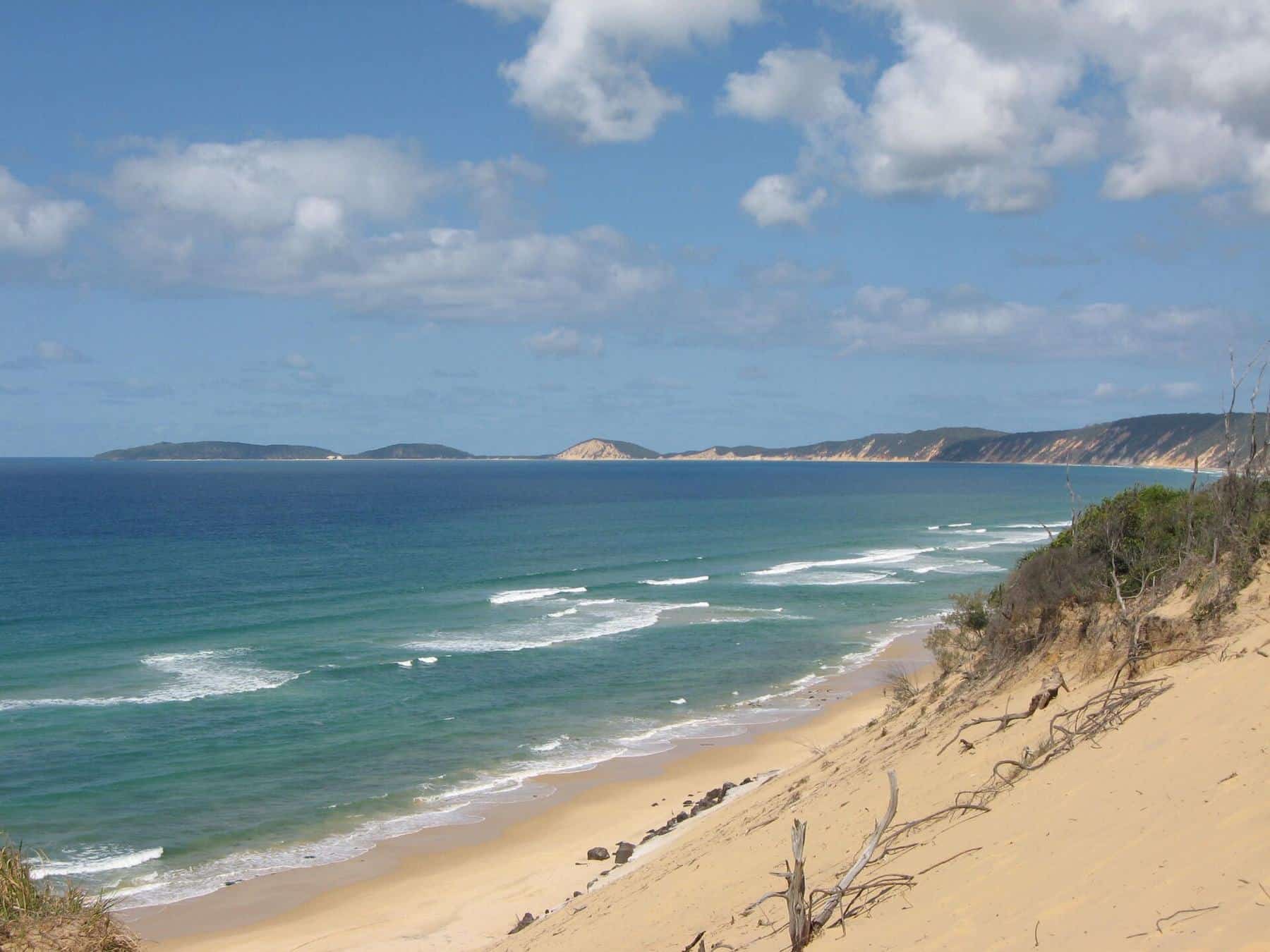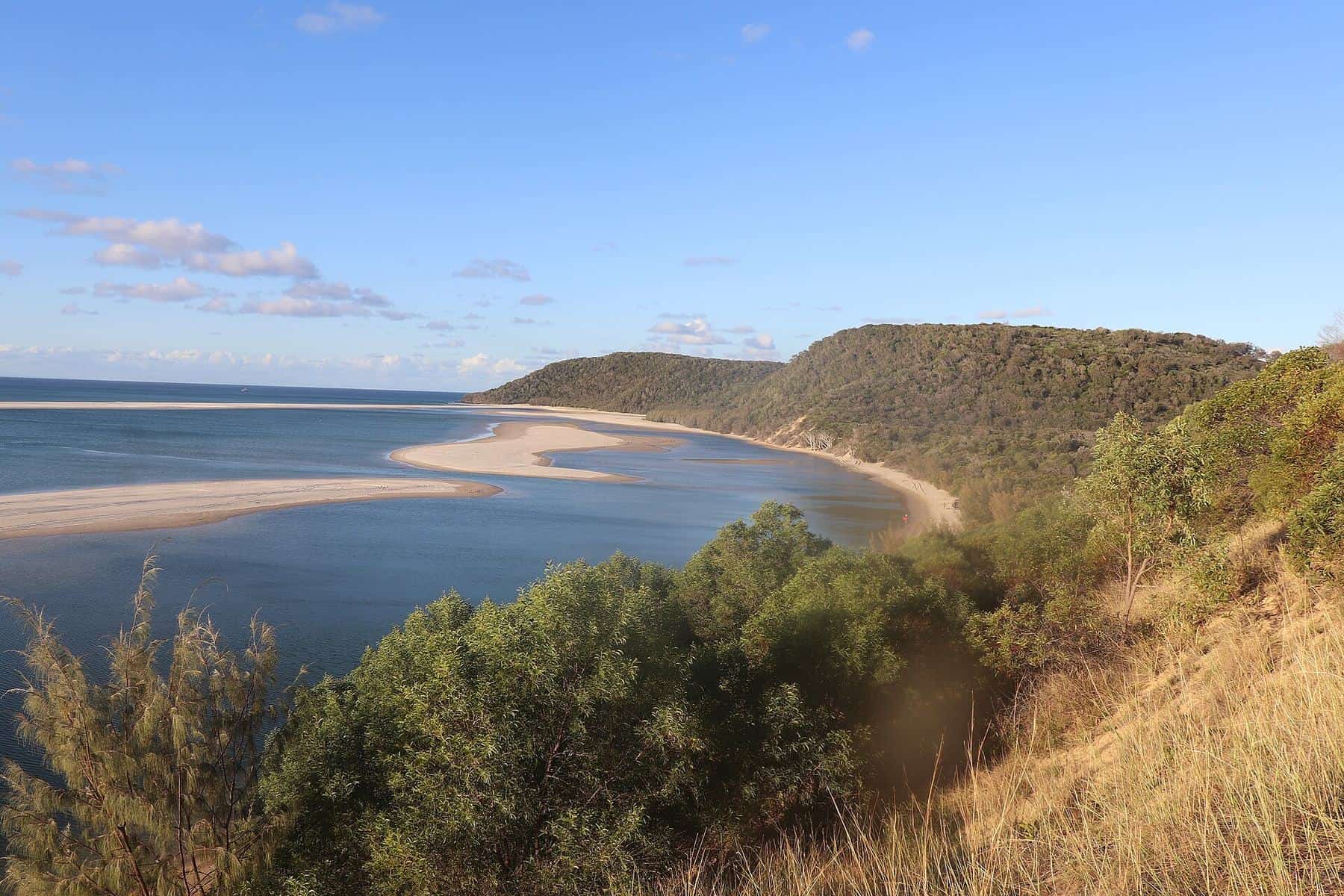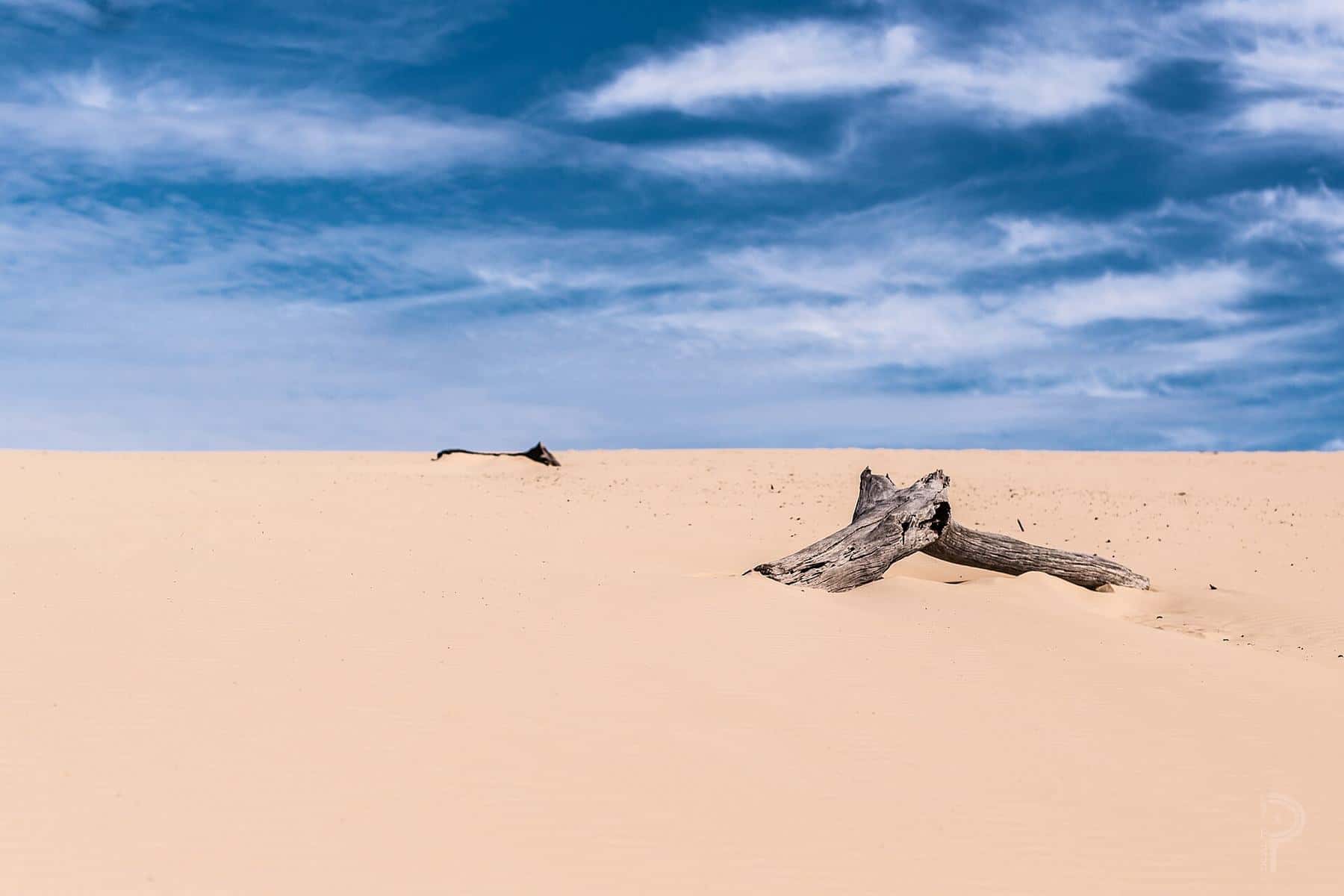
Carlo Sandblow is the signature view of Rainbow Beach. It is a huge bowl of bare, pale sand perched on the ridge above the town, where the forest gives way to a landscape that looks more like a desert than a subtropical coast. From its eastern rim you can see over the coloured cliffs and along the beach to the headland of Double Island Point. To the west, the sun sets over Tin Can Bay and the Great Sandy Strait.
15 ha
Size
Open wind-blown sand
~600 m
Walk each way
From the Cooloola Drive car park
102 km
Great Walk
Starts at the same car park
Getting there
From Rainbow Beach Road in town, turn onto Double Island Drive, then left onto Cooloola Drive. QPWS directions put the Carlo Sandblow car park about 850 metres along Cooloola Drive. The track leaves the car park and climbs gently through coastal woodland and scrub before emerging onto the sand. It is well formed and suitable for most walkers, though the final section and the sandblow itself are soft sand. Wear shoes you do not mind filling with sand, or go barefoot on cool days.
The car park is also the northern trailhead of the Cooloola Great Walk, the 102-kilometre, five-day walk to Noosa North Shore. If you are curious, walk the first few kilometres beyond the sandblow towards Lake Poona.
When to go
Sunset is the classic time. Arrive 45 minutes early to choose your spot on the western rim and watch the light turn the sand gold and pink. Bring a torch for the walk back.
Sunrise is quieter. The sun comes up over the ocean beyond the coloured cliffs, and you may have the sand to yourself.
Midday is bright, hot and glary, and the sand can burn bare feet in summer.
Windy days bring the sandblow to life. You can watch sand streaming across the surface, and paragliders and hang-gliders sometimes launch from the dunes when conditions are right.
How a sandblow forms
A sandblow, or blowout, forms when the vegetation that holds a dune in place is broken, perhaps by fire, storm damage or a change in climate. Wind then funnels through the gap and strips away the loose sand, carving out a bowl and pushing sand downwind. The Cooloola sand mass has several large sandblows, including the Cooloola Sandpatch further south on the Great Walk. Over time a sandblow can migrate and bury the forest in its path, before plants eventually recolonise and stabilise it.
Carlo Sandblow is part of the Cooloola Recreation Area of Great Sandy National Park, and its sand, plants and wildlife are protected.
The name
Carlo Point, on Tin Can Inlet just west of town, and Carlo Sandblow both carry a name that local accounts trace to Captain James Cook’s 1770 voyage along this coast. Cook is said to have named the point after a crew member called Carlo. Whatever the exact story, the name has been part of local geography for generations.
Paragliding and hang-gliding
The steady sea breezes and the height of the sandblow and coloured cliffs make Rainbow Beach a well-known site for paragliding and hang-gliding. Tandem flights are offered by licensed operators when the wind is from the right direction. If you are watching, stay clear of launch areas and follow any instructions from pilots.
Look after the sandblow
- Stay on the sand and marked track. The vegetated edges are fragile, and trampling them speeds erosion.
- Think twice about sandboarding. Boards and toboggans break up the dune surface. Check the current QPWS rules before you bring one.
- Take your rubbish home. There are no bins on the sandblow.
- Keep back from the eastern edge. The rim drops steeply towards the coloured cliffs and the sand can give way.
- Leave pets at home. Dogs are not permitted in national parks.
Sunset at Carlo Sandblow checklist
0 of 7 done
Ticks are saved in this browser only.
Photography
The sandblow rewards a wide lens. Use ripples in the sand as foreground lines, and people walking across the bowl for scale. Low light reveals texture. On the eastern rim, frame the coloured cliffs and the long curve of beach leading to Double Island Point.
Accessibility and families
The track to the sandblow is short but not wheelchair accessible. It is unsealed, climbs gently, and ends in soft sand. Prams with large wheels can manage part of the way, but a baby carrier is easier. Children love running across the open sand. Keep them well back from the steep eastern rim, which drops sharply towards the coloured cliffs. There are no toilets or water at the sandblow, so use the facilities in town before you set out.
Wildlife and plants
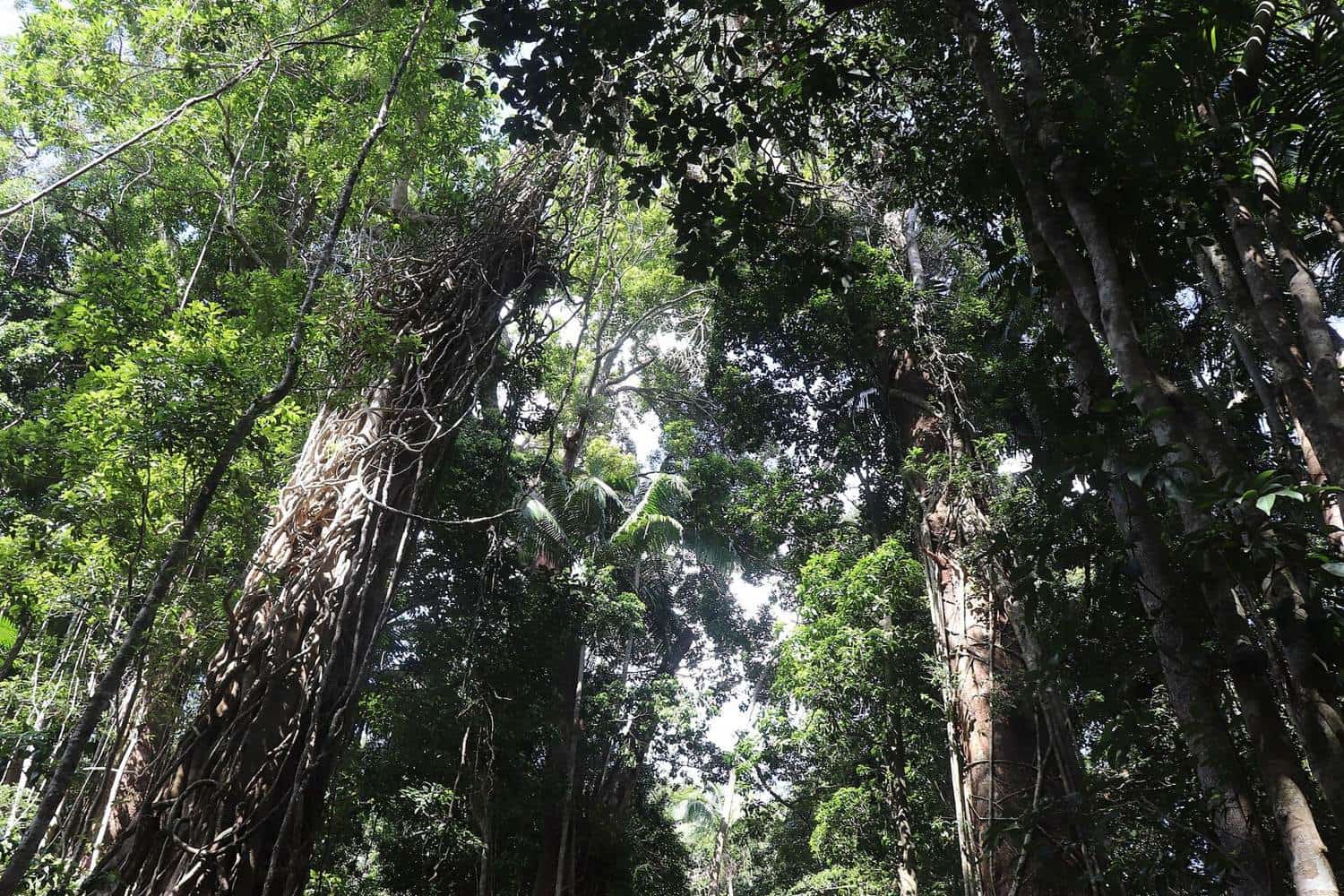
The forest along the track is typical of the Cooloola coast, with banksias, eucalypts, casuarinas and a dense understorey. Birds are most active early and late in the day. Look for honeyeaters in the banksia flowers and listen for whipbirds in the denser scrub. Lizards often bask on the sand edges on warm mornings. On the sandblow itself, look for pioneer plants such as grasses and low shrubs that slowly colonise the bare sand. They help explain how a sandblow eventually becomes forest again. Please don’t walk on them.
Combine it with
Walk the beach to the coloured sands at low tide, then come up to the sandblow for sunset. Or continue on the Great Walk towards Lake Poona. See our Cooloola guide.
Frequently asked questions
How long is the walk to Carlo Sandblow?
The walk from the Carlo Sandblow car park on Cooloola Drive is about 600 metres each way through forest, and takes around 15 minutes at an easy pace. Walking across the sandblow itself adds as much distance as you like.
Is Carlo Sandblow good for sunset?
Yes. The sandblow looks west over Tin Can Bay as well as south-east to Double Island Point, so it is one of the most popular sunset spots on the coast. It is also beautiful at sunrise.
How big is Carlo Sandblow?
Carlo Sandblow covers about 15 hectares of open, wind-blown sand.
Who was Carlo Sandblow named after?
According to local accounts, the name comes from Carlo Point, named by Captain James Cook in 1770 after a crew member on the Endeavour.
Sources and further reading
Facts on this page were checked against these primary and official sources. Conditions change — confirm before you travel or buy.
- Carlo Sandblow walk — Queensland Parks and Wildlife Service
- Cooloola Great Walk — Queensland Parks and Wildlife Service
- Carlo Sandblow — Aussie Bushwalking