Just north of Double Island Point, four volcanic pinnacles rise from the sea floor and break the surface as a cluster of rocks. Above water, Wolf Rock looks like little more than a hazard to shipping. Below, it is one of the most important places in Australia for one of its most threatened sharks, and a dive that experienced divers travel across the world to do.
~2,000
East coast grey nurse sharks
Recent research estimate cited by QPWS
~400
Breeding population
Mature males and females
18 km²
Marine national park zone
Expanded from 6.4 km² in May 2024
Meet the grey nurse shark
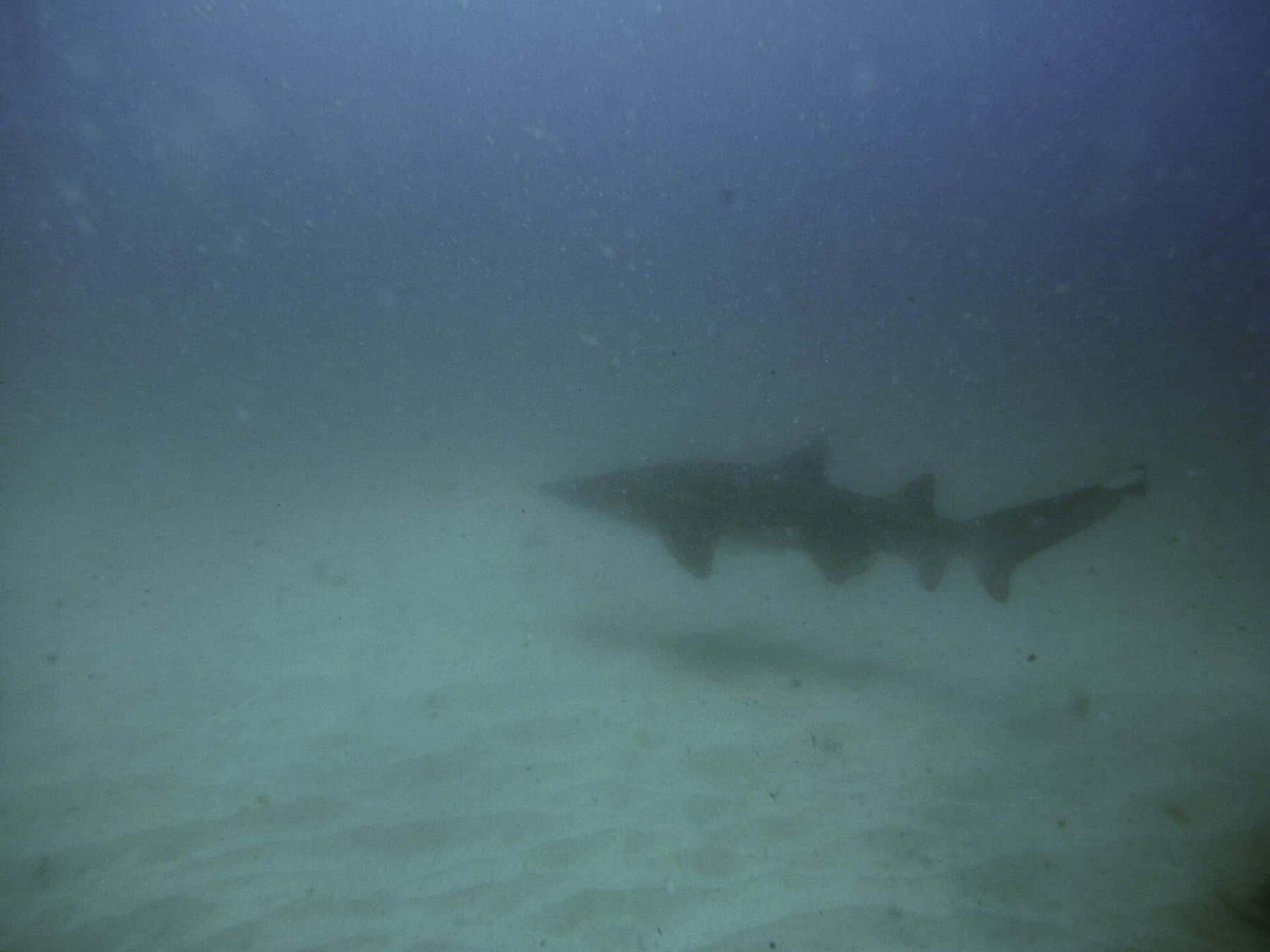
The grey nurse shark (Carcharias taurus) is a large, slow-moving shark with a pointed snout and rows of ragged teeth that protrude even when its mouth is closed. Despite its looks, it is generally placid around divers. Its conservation status is serious. It is listed as critically endangered under the Commonwealth EPBC Act and endangered under Queensland’s Nature Conservation Act.
QPWS cites research estimating about 2,000 grey nurse sharks on Australia’s east coast, but the breeding population is only about 400 mature animals. They breed slowly, producing one or two pups every two to three years, so the population has been slow to recover from past declines caused by fishing and shark control.
Why Wolf Rock matters
According to QPWS, Wolf Rock is the northernmost of only four key grey nurse shark aggregation sites in Queensland, and is used year-round by sharks migrating from New South Wales to feed, mate and gestate. Most importantly, it is the only known gestation site for pregnant females on the east Australian coast. Around half of the mature females in the population have been recorded there. Pregnant females carry their young for about 12 months and spend much of that time around Wolf Rock before heading to New South Wales to give birth.
Protection and zoning
Wolf Rock lies within a Marine National Park (green) zone of the Great Sandy Marine Park, where fishing is prohibited. Research found that sharks make excursions beyond the original zone, to The Pinnacles, Round Rock and the base of Double Island Point. As a result, QPWS expanded the zone from 6.4 to 18.0 square kilometres under the new zoning plan that began on 21 May 2024. A grey nurse shark designated area also overlays the site and regulates activities such as diving.
The biggest threat to the sharks is hooking by line fishing. Sharks swallow hooked fish, and the hooks can cause fatal internal injuries. If you fish anywhere along this coast, check the zoning maps and avoid fishing near known shark habitat.
The dive
Dive operators run trips from Rainbow Beach, launching through the surf or from sheltered water and heading south to the rock. Dives typically explore gutters, caves and walls around the pinnacles, where grey nurse sharks hover in the current. Divers also commonly report manta and other rays, turtles, large schools of fish, wobbegongs and, in season, the sound of passing humpback whales.
Conditions: Wolf Rock is exposed to the open ocean. Expect surge, swell and currents, and be prepared for trips to be cancelled when conditions are unsuitable. Visibility varies.
Experience: operators usually require advanced open water certification and recent dives, and they may set additional requirements. Book with an operator that briefs on the designated-area rules.
Diving with sharks responsibly
Follow your operator’s briefing and the rules for the designated area. In general:
- Approach slowly and stay low. Never chase, touch, feed or block a shark’s path.
- Do not enter caves or gutters where sharks are resting if it would corner them.
- Keep your distance and avoid sudden movements and bursts of bubbles near the sharks.
- No spearfishing or fishing in the green zone.
- Report hooked or injured sharks to QPWS.
Wolf Rock dive checklist
0 of 7 done
Ticks are saved in this browser only.
Choosing an operator
Look for an operator that runs regular trips to Wolf Rock and briefs divers on the designated-area rules. Check what experience they require, what equipment is included, and how they handle surf launches and cancellations. Ask about group size and guide ratios. Read recent reviews from other divers, and confirm the latest prices and departure times directly with the operator. Dive trips here depend heavily on the weather, so allow a spare day in your plans.
When to go
Grey nurse sharks are present at Wolf Rock year-round. Sea conditions are often calmest in the cooler months, though winter can bring big south-east swells. Water temperatures are warmest in late summer. Ask operators about recent conditions. See our weather guide.
Not a diver?
You can still see Wolf Rock’s pinnacles from the Double Island Point lighthouse. Kayak and snorkel tours around the point also offer the chance to see turtles, rays and dolphins in shallower water.
Frequently asked questions
Where is Wolf Rock?
Wolf Rock is a group of submerged volcanic pinnacles just north of Double Island Point, in the Great Sandy Marine Park. Dive boats reach it from Rainbow Beach.
Are grey nurse sharks dangerous?
Grey nurse sharks look fearsome because of their protruding teeth, but they are generally docile towards divers who behave calmly and keep their distance. Divers must follow the rules for the grey nurse shark designated area.
Why is Wolf Rock important for grey nurse sharks?
QPWS says Wolf Rock is the only known gestation site for pregnant female grey nurse sharks on the east Australian coast. Around half of the mature females in the population have been recorded there.
What experience do I need to dive Wolf Rock?
Wolf Rock is an exposed, open-ocean site with surge and currents. Operators typically require advanced certification and recent experience. Check requirements when you book.
Sources and further reading
Facts on this page were checked against these primary and official sources. Conditions change — confirm before you travel or buy.
- Grey nurse sharks — Great Sandy Marine Park — Queensland Parks and Wildlife Service
- Carcharias taurus (grey nurse shark) — Species Profile and Threats Database — Australian Government
- Great Sandy Marine Park zoning — Queensland Parks and Wildlife Service