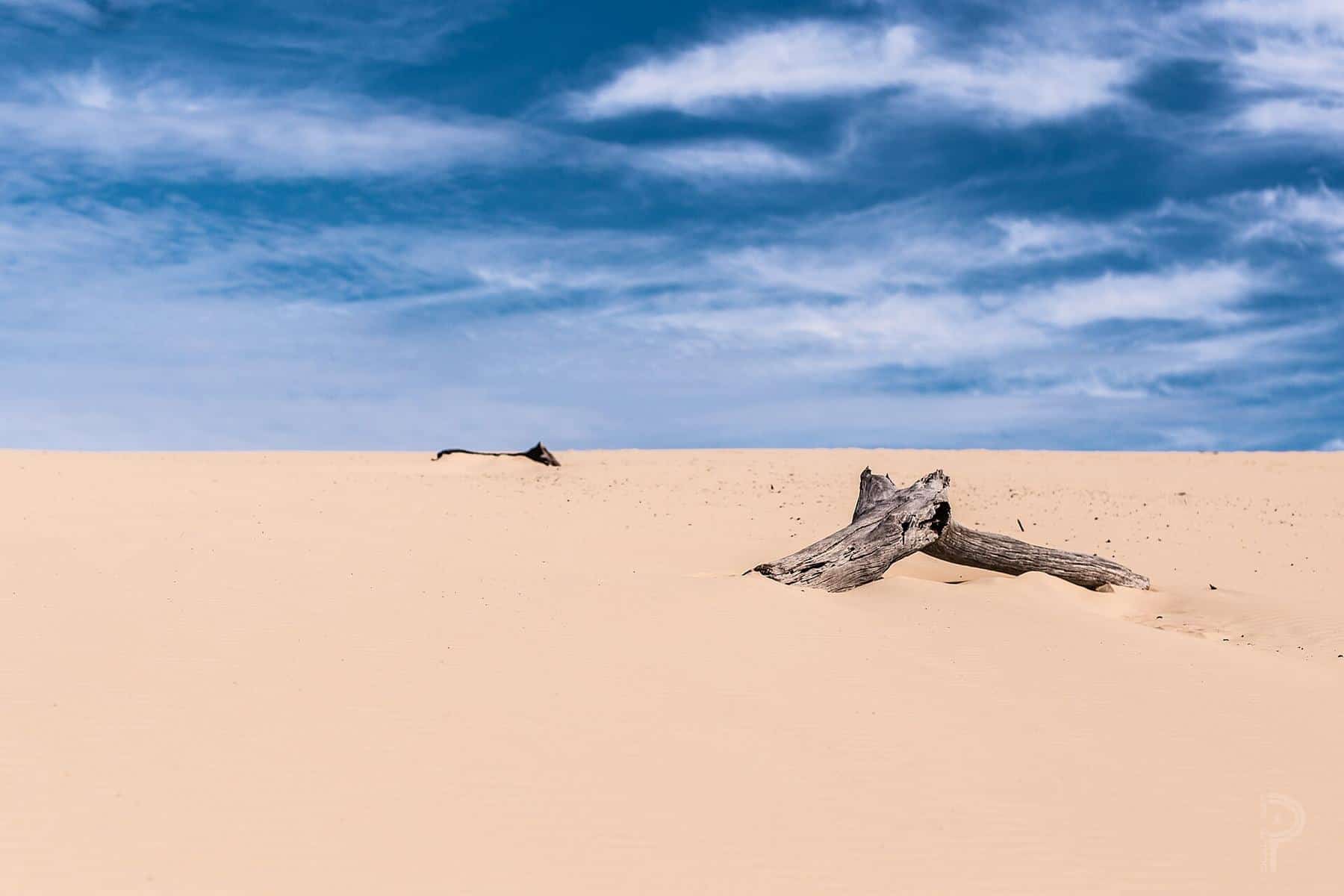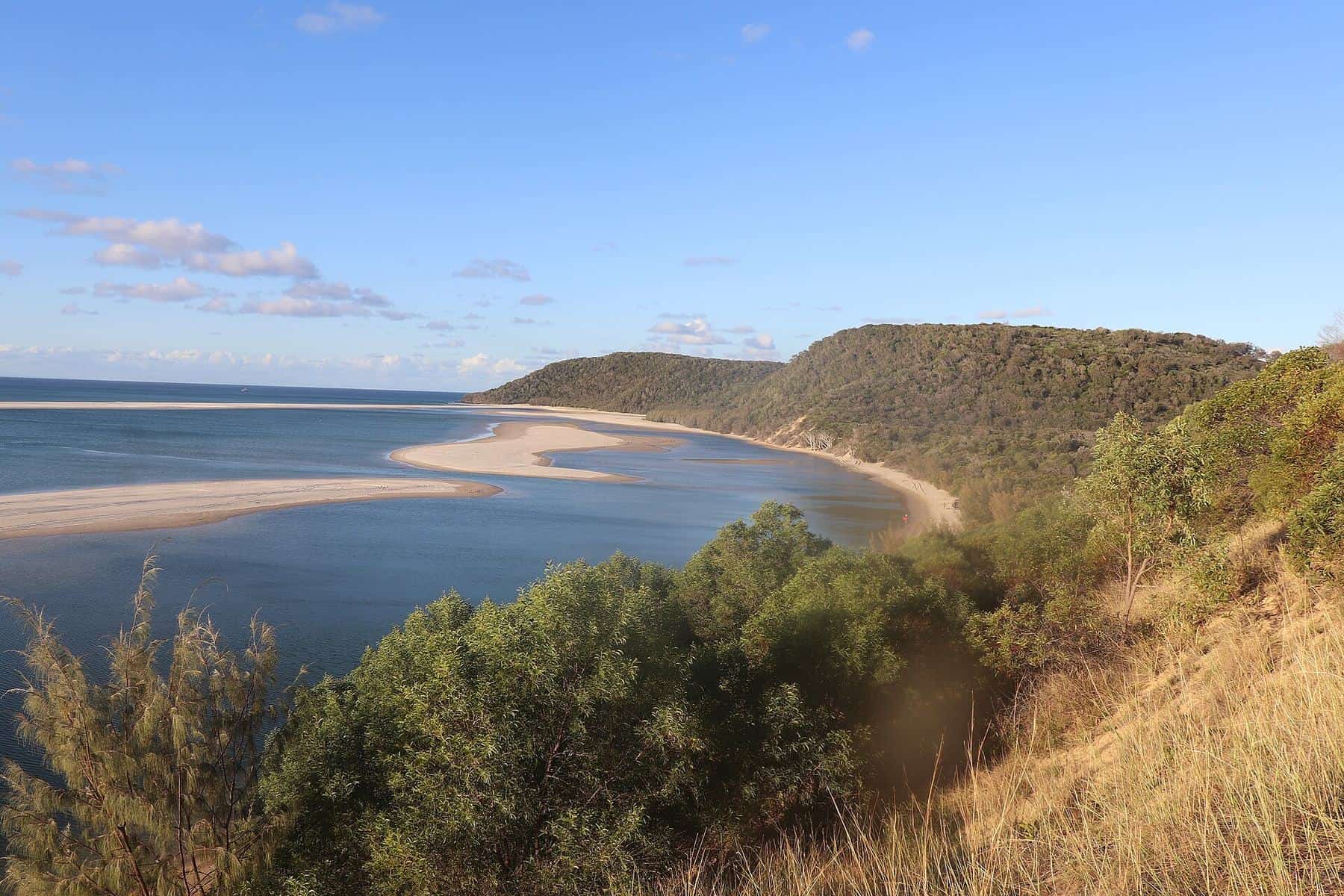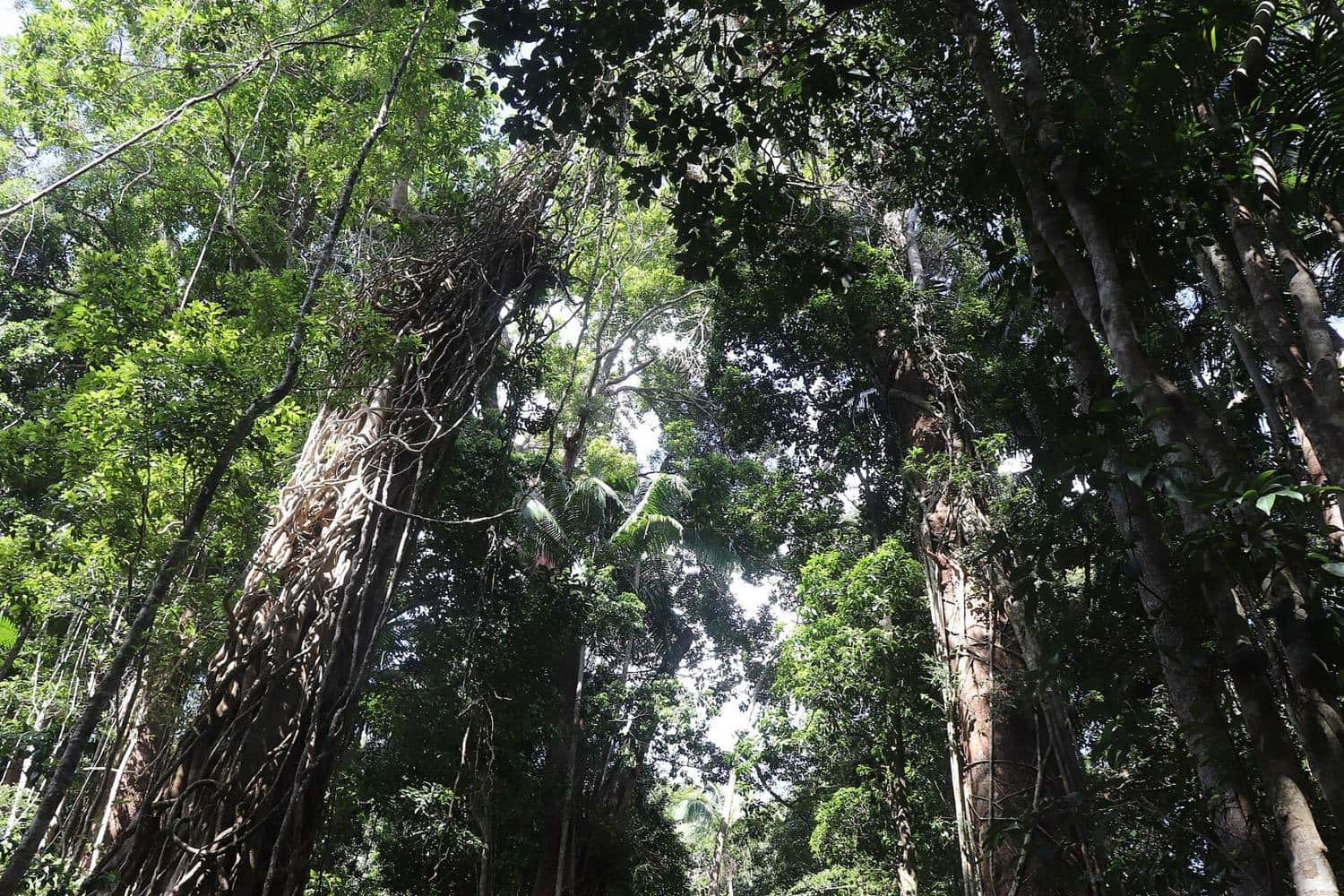
Turn your back on the surf at Rainbow Beach and you face the Cooloola Recreation Area of Great Sandy National Park. It covers the coast and hinterland south to Noosa North Shore. The landscape is built almost entirely of sand, piled into high dunes over hundreds of thousands of years and colonised by heath, eucalypt forest and, in sheltered places, true rainforest. Scattered through it are freshwater lakes that seem impossible in such porous ground.
102 km
Cooloola Great Walk
Allow 5 days
12 ha
Lake Poona
A perched lake in rainforest
~70 km
Noosa to Double Island Pt
Per the Queensland Heritage Register
Why Cooloola matters
The Cooloola sand mass, together with K’gari to the north, forms part of the largest coastal sand system in the world. Its dunes record a long history of sand movement, and the soils beneath them range from young, fertile sands near the coast to old, deeply leached sands inland. Each supports different vegetation. This sequence has made the area important to scientists studying how ecosystems develop over time. The park also protects wallum heath, a habitat for rare frogs adapted to acidic water, as well as the upper Noosa River, one of the least disturbed rivers in south-east Queensland.
For the Kabi Kabi people, this is Country rich in food, water and story. Middens and other cultural sites are found throughout the area.
Lake Poona
Lake Poona is the most accessible of Cooloola’s lakes from Rainbow Beach. It covers about 12 hectares and sits in a hollow in the dunes, surrounded by paperbarks, sedges and rainforest. Its water is stained the colour of tea by tannins from the vegetation, but is surprisingly clear up close. Visitor information describes it as one of the few places on Earth where rainforest grows on ancient sand dunes.
Getting there: a walking track leads to the lake from the Bymien picnic area, off Rainbow Beach Road south-west of town. The lake is also the first overnight stop on the Cooloola Great Walk from the Carlo Sandblow car park. NPAQ describes that stage as about 15 kilometres.
Swimming: many visitors swim in the lake. Enter carefully, never dive, and help protect the water by washing off sunscreen and insect repellent before you swim, or swimming without them.
Freshwater
Freshwater lies inland of the beach about halfway between Rainbow Beach and Double Island Point. It has a QPWS camping area and day-use area set in forest behind the dunes, with walks including the track to Freshwater Lake. The Freshwater Road links Rainbow Beach Road with the beach at Freshwater, providing an alternative to driving past Mudlo Rocks. It is a sand track suitable for high-clearance 4WDs only.
Teewah Beach
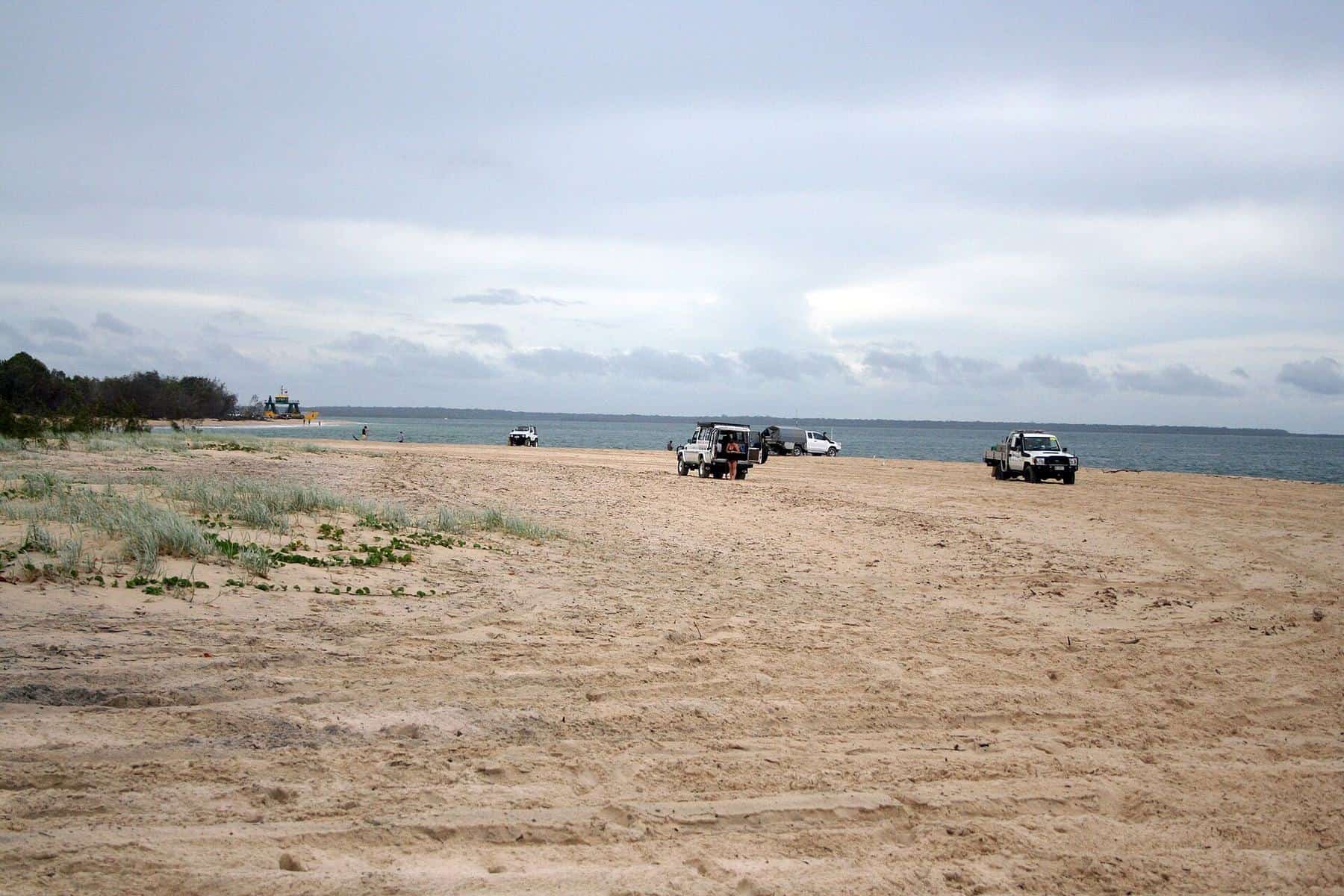
South of Double Island Point, Teewah Beach runs towards Noosa North Shore with long stretches of beach camping. The cliffs of coloured sand continue here, and the camping zones are popular in school holidays. Permits are required, and QPWS sets rules on camping zones, fires and waste. Check the latest information before you go.
The Cooloola Great Walk
The Cooloola Great Walk is a 102-kilometre, one-way walk between Noosa North Shore and Rainbow Beach. QPWS recommends allowing five days. It is graded Grade 4, for walkers with experience. The northern trailhead is at the Carlo Sandblow car park in Rainbow Beach, and the southern trailhead is on Noosa North Shore.
The route crosses high dunes and sandblows, passes perched lakes, follows the upper Noosa River and descends through rainforest with kauri pines and strangler figs. Walkers stay at designated walkers’ camps, which must be booked. Water is limited between some camps. Carry enough water, treat any water you collect, and check park alerts for closures.
Cooloola Great Walk planning checklist
0 of 7 done
Ticks are saved in this browser only.
Shorter walks
- Carlo Sandblow: about 600 metres each way from the car park. See our Carlo Sandblow guide.
- Lake Poona: from the Bymien picnic area.
- Double Island Point lighthouse: 2.2 kilometres return. See Double Island Point.
Wildlife to look for
Cooloola is rich in wildlife for such a sandy landscape. The wallum heath and lakes support acid frogs, including the Cooloola sedgefrog, which are adapted to the tea-coloured, acidic water. Birds range from honeyeaters and black cockatoos in the heath to rainforest species in the gullies. Echidnas, lace monitors and swamp wallabies are often seen along tracks. Wongari (dingoes) also live in the area, so the same dingo-safe rules apply as at Inskip and K’gari. Keep food secure, and keep children close.
Getting around the park
Most of the park’s attractions near Rainbow Beach are reached by sealed road and short walks: Carlo Sandblow, the Bymien picnic area and Lake Poona. Freshwater, the beach and Double Island Point need a high-clearance 4WD and a QPWS vehicle access permit. If you don’t have a suitable vehicle, guided tours from Rainbow Beach and Noosa visit the main highlights.
Rules and safety
- National park rules apply: no dogs, no firearms, and no removal of plants, animals or sand.
- Fires are allowed only where permitted and may be banned during high fire danger.
- Carry plenty of water. Sand walking is hot and tiring.
- Mobile coverage is limited. Tell someone your plans.
- Check QPWS park alerts before you go.
Frequently asked questions
How do you get to Lake Poona?
Lake Poona is reached on foot from the Bymien picnic area, off Rainbow Beach Road south-west of town, or along the first stage of the Cooloola Great Walk from the Carlo Sandblow car park.
Can you swim in Lake Poona?
Many visitors swim in Lake Poona. It is a perched lake with tea-coloured water stained by tannins. Never dive in, avoid using sunscreen just before swimming to protect the water quality, and check QPWS advice for current conditions.
How long is the Cooloola Great Walk?
The Cooloola Great Walk is 102 kilometres one way between Noosa North Shore and Rainbow Beach. QPWS recommends allowing five days. It is graded Grade 4, and walkers’ camps require permits.
What is a perched lake?
A perched lake forms when a layer of organic material and sand cemented together creates a watertight base in the dunes, trapping rainwater above the main water table. The Great Sandy region has one of the world’s greatest concentrations of them.
Sources and further reading
Facts on this page were checked against these primary and official sources. Conditions change — confirm before you travel or buy.
- Cooloola Recreation Area, Great Sandy National Park — Queensland Parks and Wildlife Service
- Cooloola Great Walk — Queensland Parks and Wildlife Service
- Cooloola Great Walk — National Parks Association of Queensland