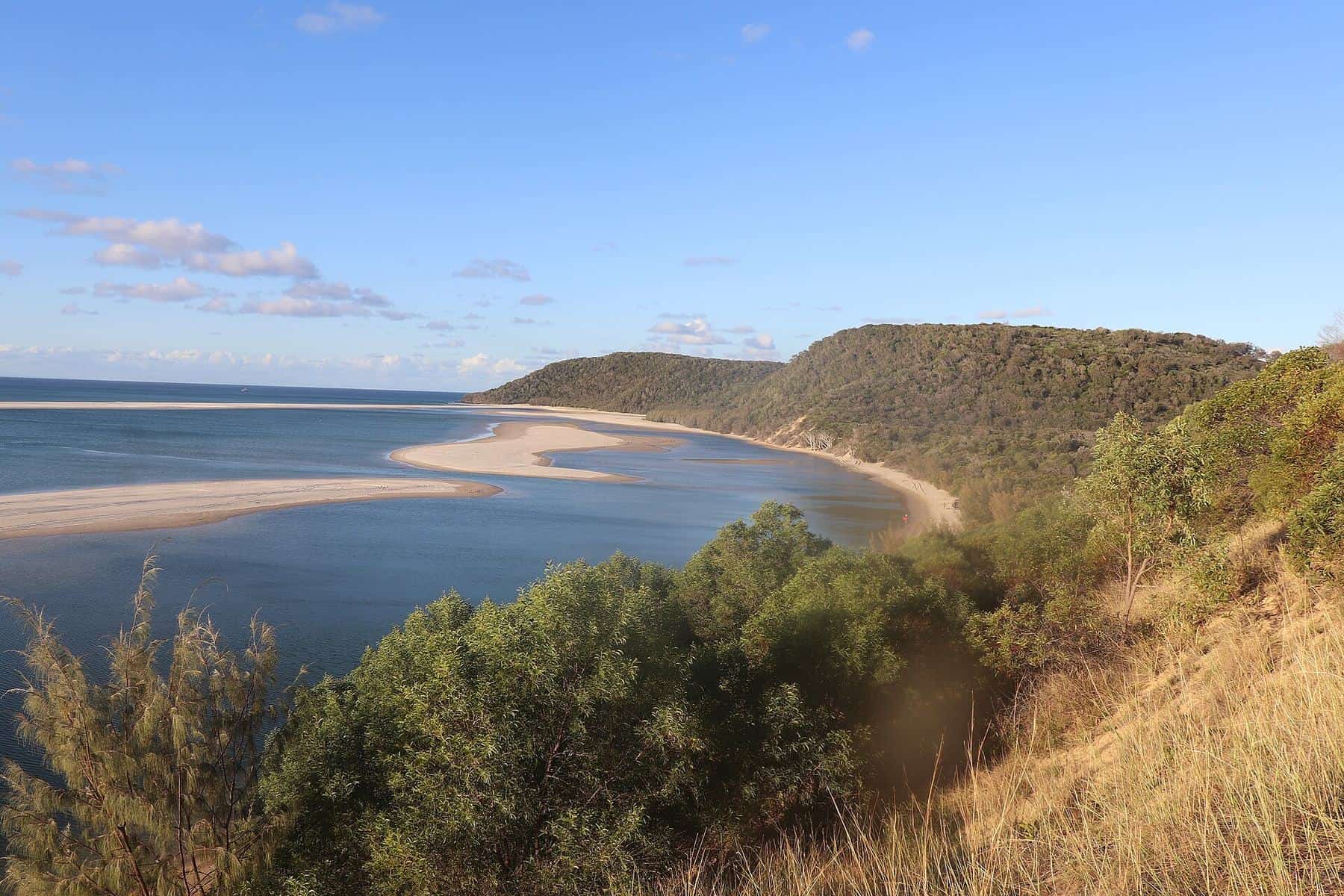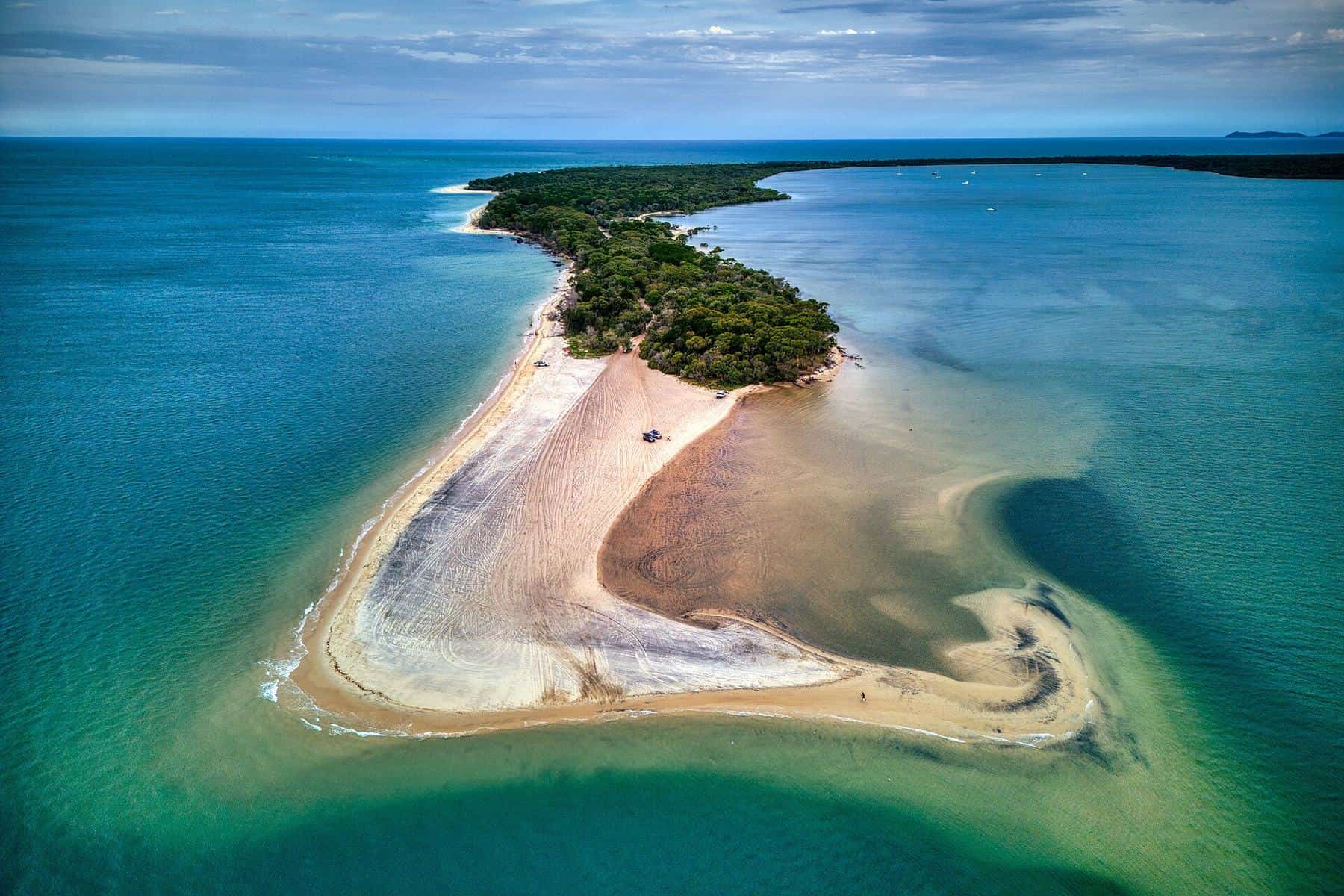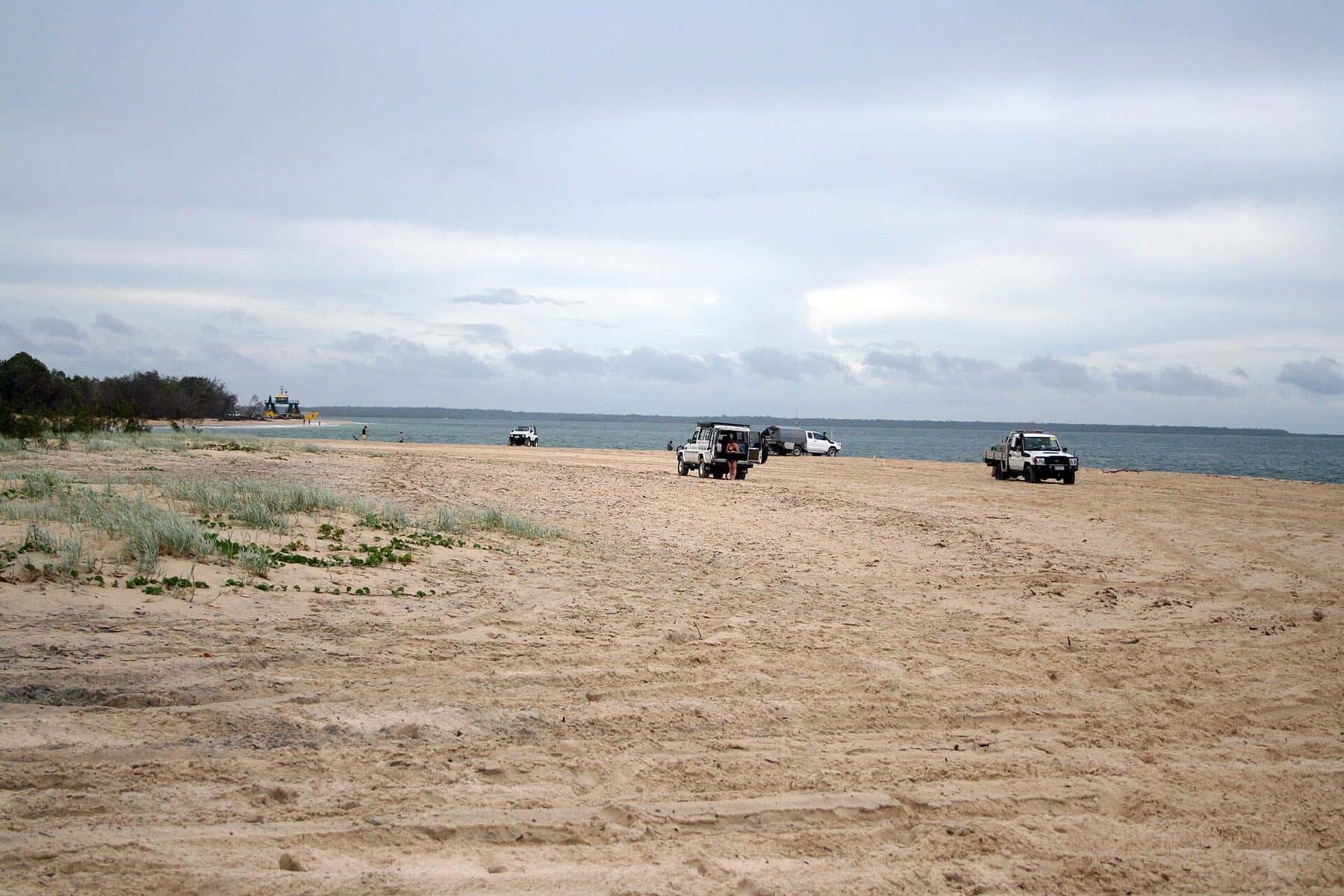
Driving on sand is part of the culture of the Cooloola Coast. With a capable 4WD, a permit and an eye on the tides, you can drive from Noosa North Shore to Double Island Point, through to Rainbow Beach and on to Inskip Point and K’gari. But the beach is a road with very particular hazards, and QPWS and police deal with bogged, stranded and rolled vehicles all year. This guide explains the rules and the skills that keep you safe.
Permits
QPWS requires a vehicle access permit for driving on the beaches of the Cooloola Recreation Area, from the north head of the Noosa River to Middle Rocks, and on the Inskip Peninsula and K’gari. Buy one online or in person before you drive, and carry a printed or digital copy. Camping in these areas needs a separate camping permit. Fees and conditions change, so check the QPWS permits page.
The tide rule
QPWS advises driving within about two hours either side of low tide and avoiding high tide. At high tide the sea can reach the dunes, leaving no hard sand to drive on, and waves can swamp vehicles. Use the official tide tables from Maritime Safety Queensland and our planner:
Beach-driving tide window
Enter the time of low tide from the official tide tables. QPWS advises driving within about two hours either side of low tide.
Start driving after
8:30 am
Low tide
10:30 am
Be off the beach by
12:30 pm
A planning aid only. Swell, wind and soft sand can make the beach unsafe even inside this window, and Mudlo Rocks is often impassable even at low tide. Always check QPWS park alerts and use your own judgement.
Also watch the swell and wind. A big south-easterly swell can push water up the beach even at low tide.
Mudlo Rocks and Freshwater Road
Just south of Rainbow Beach, the route to Double Island Point must pass Mudlo Rocks, sometimes called Eight Mile Rocks. It is a rocky outcrop at the base of the coloured cliffs. QPWS warns that it is often impassable even at low tide and should only be attempted by experienced drivers. Sand levels around the rocks change with every storm. Many vehicles have been damaged or caught by the tide here.
The alternative is Freshwater Road, an inland sand track from Rainbow Beach Road to the beach at Freshwater, south of the rocks. It is slower and can be rough, but avoids the rocks altogether.
Before you hit the sand
- Vehicle: a high-clearance 4WD with low range. AWD soft-roaders and 2WD vehicles are not suitable.
- Tyres: lower pressures before entering soft sand, following your vehicle and tyre maker’s guidance. Carry an accurate gauge and a compressor to reinflate.
- Recovery gear: a shovel, recovery tracks, a rated snatch strap and rated shackles or soft shackles, plus the knowledge to use them safely.
- Supplies: water, food, first-aid kit, sun protection and a fully charged phone. Coverage is patchy, so consider a satellite messenger or PLB.
- Load: keep it low and secure. Overloaded vehicles bog and roll more easily.
On the beach
- Road rules apply. Seatbelts, licences, registration, alcohol limits and speed limits are all enforced. Beach speed limits are signposted.
- Drive on the firm sand between the high-water mark and the water, and avoid the soft sand at the dune base where people sunbathe.
- Keep left and pass oncoming vehicles left to left.
- Watch for washouts. Creeks and runoff cut steep gutters across the beach that can damage suspension or roll a vehicle.
- Slow down for pedestrians, children, fishers, wildlife and birds feeding at the water’s edge. Give way to pedestrians.
- Don’t drive in the water or through waves. Salt water is corrosive and waves can lift and turn a vehicle.
- Indicate when pulling over or turning onto tracks.
If you get bogged
- Stop before you dig in deeper. Spinning wheels only make it worse.
- Check the tide. If it is rising, act quickly or get everyone to safety.
- Lower tyre pressures further, within safe limits.
- Clear sand from in front of the wheels and from under the chassis.
- Use recovery tracks, then drive out gently in low range.
- Only use a snatch strap with rated recovery points, and keep bystanders well clear.
If your vehicle is caught by the tide, your safety comes first. Get everyone out and up the beach.
Inskip and K’gari
Inskip Peninsula tracks are soft and busy, especially near the barge. On K’gari, the beach is the main highway, and inland tracks are narrow, slow and deep in sand. Read our Inskip Point and K’gari guides.
Beach driving checklist
0 of 8 done
Ticks are saved in this browser only.
New to beach driving?
Consider a 4WD training course or a guided tour first. Many experienced drivers recommend starting with short drives near town on a falling tide before tackling Double Island Point or K’gari.
Frequently asked questions
Do you need a permit to drive on Rainbow Beach?
Yes, for the national park and recreation area beaches. QPWS requires a vehicle access permit for beach driving from the north head of the Noosa River to Middle Rocks, including the Cooloola beach drive from Rainbow Beach, as well as on the Inskip Peninsula and K’gari.
When is it safe to drive the beach at Rainbow Beach?
QPWS advises driving within about two hours either side of low tide and avoiding high tide. Even then, check conditions, because swell, erosion and soft sand can make the beach impassable.
Can you drive past Mudlo Rocks?
Sometimes, but QPWS warns that Mudlo Rocks is often impassable even at low tide and should only be attempted by experienced drivers. The inland Freshwater Road is the alternative route between Rainbow Beach Road and the beach.
What tyre pressure should I use for beach driving?
Lower pressures increase the tyre footprint and help in soft sand. The right figure depends on your vehicle, tyres and load, so follow your vehicle and tyre manufacturer’s guidance, drive slowly at low pressures and reinflate before returning to sealed roads.
Sources and further reading
Facts on this page were checked against these primary and official sources. Conditions change — confirm before you travel or buy.
- Cooloola — frequently asked questions — Queensland Parks and Wildlife Service
- Cooloola Beach drive — Queensland Parks and Wildlife Service
- Vehicle access permits — Queensland Parks and Wildlife Service
- Cooloola and Inskip access map (PDF) — Queensland Parks and Wildlife Service
- Queensland tide tables — Maritime Safety Queensland