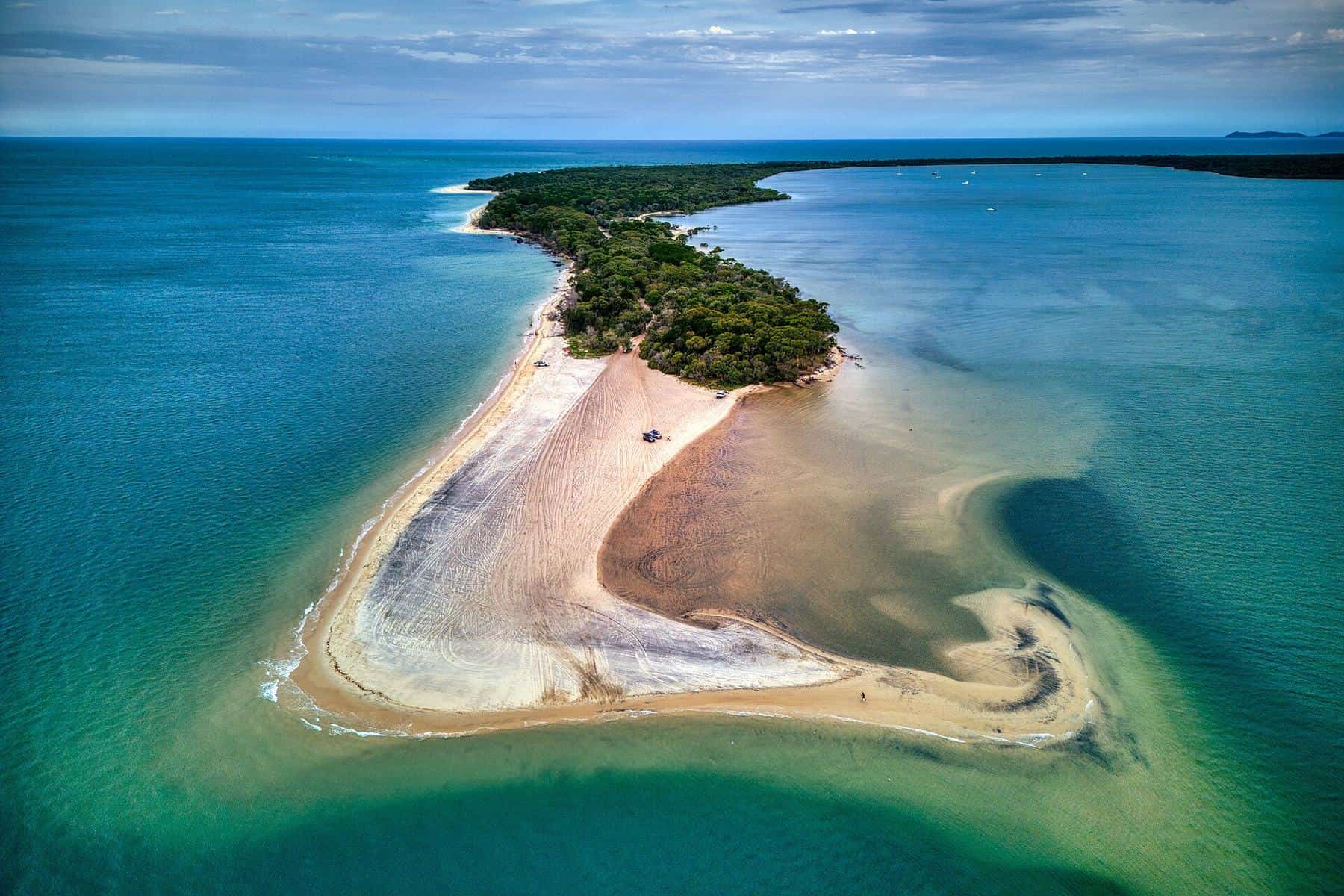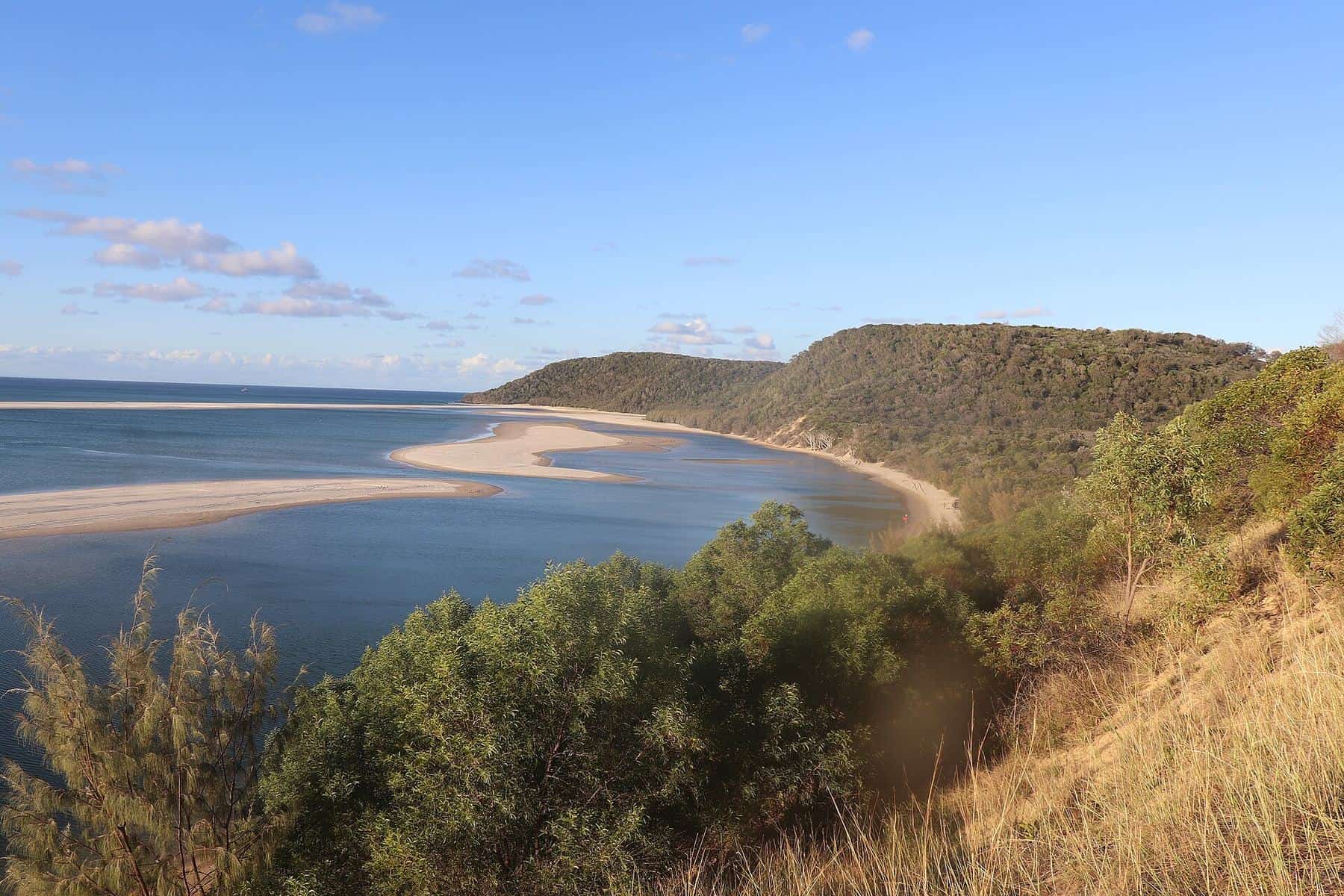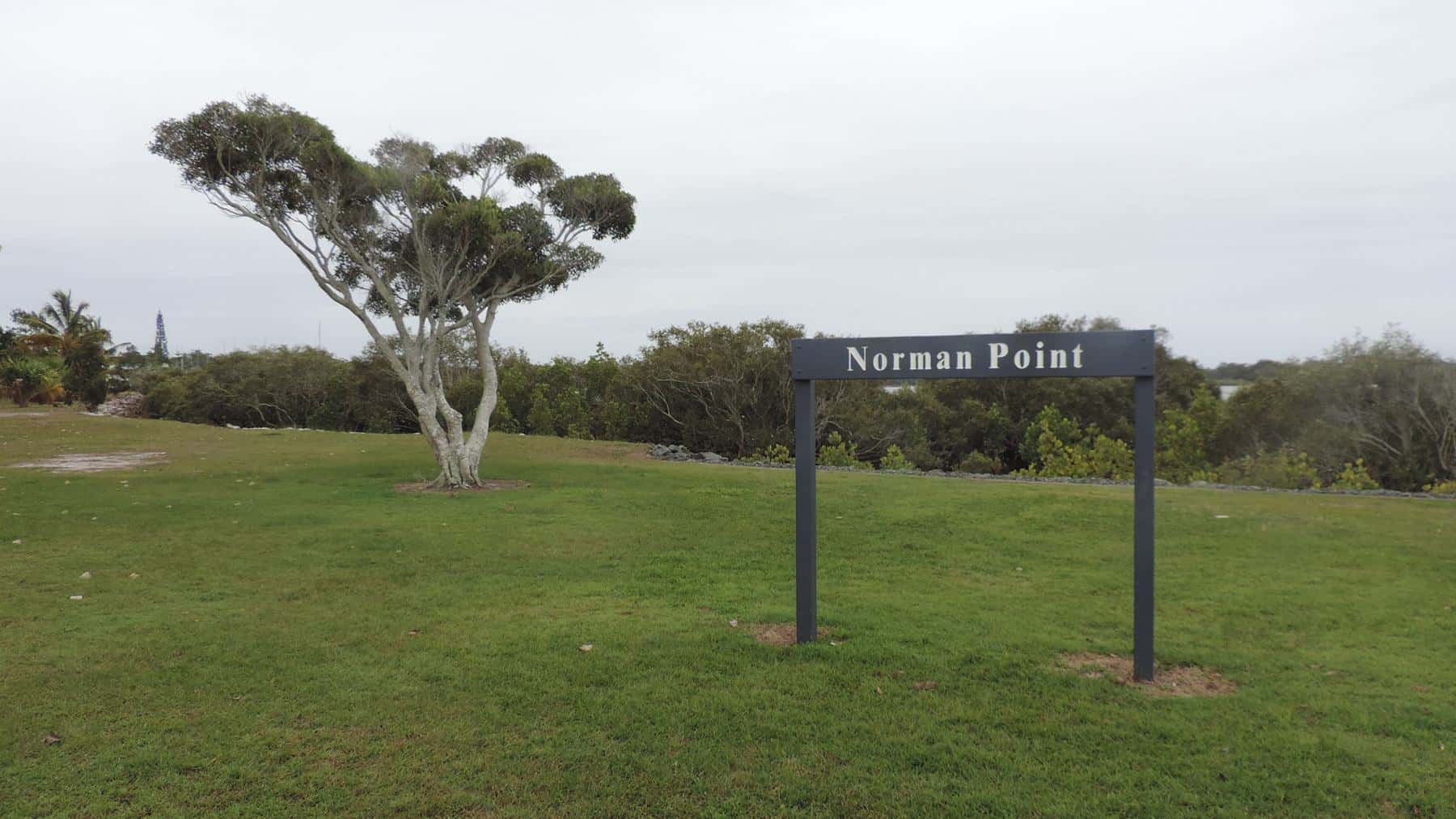
Tin Can Bay is everything Rainbow Beach is not. Where Rainbow Beach faces the open surf, Tin Can Bay sits on a long, sheltered inlet of mangroves, sandbanks and quiet water at the southern end of the Great Sandy Strait. It is a fishing and boating town with a large marina, a relaxed foreshore and one famous family of visitors: the wild Australian humpback dolphins that swim up to Norman Point most mornings.
1950s
Dolphin visits began
With a dolphin called Old Scarry
~30 min
From Rainbow Beach
By sealed road
Calm water
Tin Can Inlet
Great for paddling and boating
The dolphins
The story most often told begins in the 1950s. A badly injured male dolphin, later known as Old Scarry, was found in the bay and helped by local people. He returned again and again to the foreshore and, over the years, brought other dolphins with him. Old Scarry stopped appearing in the 1980s, but his descendants continued the tradition. ABC News reported in 2018 that a female called Mystique, born in the early 1990s, had become a regular visitor and leader of the group.
The dolphins are Australian humpback dolphins (Sousa sahulensis), a species of shallow coastal and estuarine waters in northern Australia. They are shy and less familiar than bottlenose dolphins, which makes the Tin Can Bay encounters especially unusual.
Visiting the dolphins
A dolphin centre at Norman Point runs a supervised morning feeding program, in which visitors can stand in the shallows and offer a small fish under staff guidance. The program is regulated to protect the animals: the amount of food is limited so that the dolphins continue to feed themselves in the wild. Times, numbers and costs change, so check with the centre before you go and arrive early.
The dolphins are wild. Some mornings they don’t appear, and visitors should never touch them or try to feed them outside the supervised program. Feeding wild dolphins elsewhere is prohibited in Queensland because it can harm their health and behaviour.
Things to do in Tin Can Bay
- Boating and fishing. The inlet and the Great Sandy Strait offer sheltered fishing for whiting, bream, flathead and mangrove jack, along with crabbing in season. The area is within the Great Sandy Marine Park, so check zoning maps and Queensland fishing rules.
- Hire a boat or kayak. Paddle the calm inlet and mangrove creeks, or hire a small boat and explore towards Carlo Point and Inskip.
- Foreshore walk. A path runs along the waterfront with views across the inlet, playgrounds and picnic areas.
- Birdwatching. The tidal flats attract shorebirds, including migratory species in the warmer months, and the cormorants and pelicans are a constant presence.
- Seafood. Tin Can Bay is home to a commercial fishing and prawn fleet, and fresh local seafood is often available.
Getting there
From Rainbow Beach, head back along Rainbow Beach Road and turn right onto Tin Can Bay Road. It is roughly 40 kilometres and about half an hour. From Gympie, Tin Can Bay is about 50 minutes’ drive. The roads are sealed, so any car will do.
A combined day
Start early with the dolphins at Norman Point, have breakfast on the foreshore, then spend the late morning paddling the inlet. Drive back to Rainbow Beach for a low-tide walk to the coloured sands and finish with sunset at Carlo Sandblow.
Tin Can Bay day checklist
0 of 7 done
Ticks are saved in this browser only.
History in brief
The Tin Can Bay area is Kabi Kabi Country. European timber-getters and fishermen worked the inlet from the nineteenth century, and the town grew as a fishing port and holiday spot in the twentieth. The origin of the name “Tin Can” is debated. One commonly repeated explanation links it to an Aboriginal word, but sources disagree, so we leave it as an open question.
Other wildlife
Australian humpback dolphins are not the only residents. Bottlenose dolphins are also seen in the inlet and strait, and green turtles graze on seagrass in the shallows. Dugongs live in the Great Sandy Strait, which is an important seagrass habitat. In the warmer months, migratory shorebirds that breed in the Northern Hemisphere feed on the exposed sand and mudflats at low tide. Keep your distance from roosting birds, especially at high tide, when they have fewer places to rest.
Carlo Point and the inlet
Between Tin Can Bay and Rainbow Beach, Carlo Point on Tin Can Inlet has a boat ramp and calm water popular with boaters, kayakers and anglers. It is a good launching point for exploring the inlet towards Inskip, but watch the tides, because sandbanks are exposed at low water.
Look after the bay
Take your rubbish home, especially fishing line and hooks, which entangle dolphins, turtles and birds. Slow down in boats near dolphins and turtles, and keep your distance from wildlife on the water.
Frequently asked questions
When do the dolphins come to Tin Can Bay?
Wild Australian humpback dolphins usually visit the foreshore at Norman Point in the morning, but they are wild animals and do not appear every day. Check with the dolphin centre for current feeding times.
What kind of dolphins visit Tin Can Bay?
The dolphins are Australian humpback dolphins, a species found in shallow coastal waters of northern Australia and southern New Guinea. They are recognisable by their hump-like dorsal fin and, in adults, pale grey to pinkish colouring.
How did the Tin Can Bay dolphin feeding begin?
Accounts trace it to the 1950s, when a badly injured dolphin, later nicknamed Old Scarry, was helped by locals and returned repeatedly to the foreshore, later bringing other dolphins. His descendants still visit.
How far is Tin Can Bay from Rainbow Beach?
Tin Can Bay is roughly 40 kilometres by road from Rainbow Beach, about a 30-minute drive via Rainbow Beach Road and Tin Can Bay Road.
Sources and further reading
Facts on this page were checked against these primary and official sources. Conditions change — confirm before you travel or buy.
- Tin Can Bay has a special friendship with a pod of wild dolphins spanning generations — ABC News
- Australian humpback dolphin — Australian Government DCCEEW
- Great Sandy Marine Park — Queensland Parks and Wildlife Service