Rainbow Beach sits at about 26 degrees south, on the subtropical coast of south-east Queensland. Long-term averages summarised from Bureau of Meteorology data give it a mean maximum of about 25.5 °C, a mean minimum of about 16.7 °C and around 1,450 millimetres of rain a year. In practice, that means warm-to-hot, humid summers with storms and heavy rain, and mild, mostly dry and sunny winters.
~25.5 °C
Mean maximum
Annual average
~16.7 °C
Mean minimum
Annual average
~1,450 mm
Annual rainfall
Wettest in late summer and autumn
Season by season
Summer (December to February)
Hot, humid days with afternoon storms and the year’s heaviest rain beginning to arrive. The ocean is at its warmest. The Christmas and January school holidays are the busiest time of year, so book accommodation and campsites well ahead. Heavy rain can close tracks and cut washouts across the beach. Marine stingers can occur in Queensland waters in the warmer months, so swim at patrolled beaches and follow lifeguard advice.
Good for: swimming, surfing, boating, warm-water diving.
Autumn (March to May)
Early autumn often continues the wet season, with humid weather, and sometimes ex-tropical cyclone systems bring big swells and heavy rain. By May the weather usually settles into clear, comfortable days and cooler nights. Crowds thin after Easter.
Good for: fishing, walking, quieter beaches late in the season.
Winter (June to August)
The driest and most settled season, with sunny days in the low 20s and cool nights. It is the best time for long walks such as the Cooloola Great Walk, and humpback whales begin passing the coast on their northward migration. Strong south-easterly winds and swells can occur, which may affect beach driving and dive trips.
Good for: whale watching, hiking, beach driving, sunsets at Carlo Sandblow.
Spring (September to November)
Warming temperatures, generally dry weather and long days. Whales are still passing early in the season, now heading south with calves. Wildflowers bloom in the coastal heath. Storms become more frequent late in spring. The September school holidays are busy.
Good for: whale watching, walking, camping, a bit of everything.
How the weather affects your plans
Weather checks before you go
0 of 6 done
Ticks are saved in this browser only.
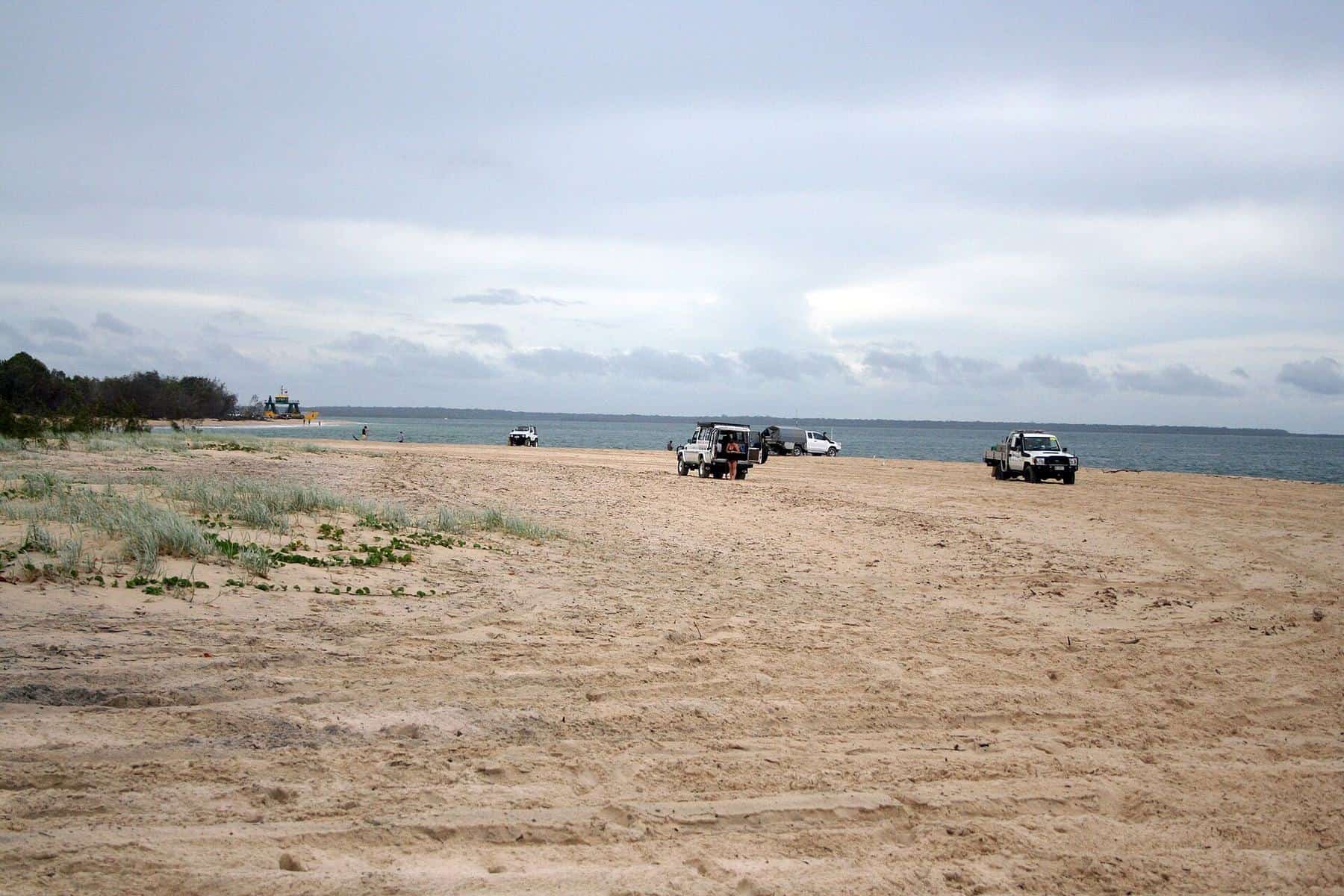
Beach driving is affected by tides, swell and recent weather. After big seas, beaches can be narrow, soft and scattered with washouts. Read our beach driving guide.
Diving at Wolf Rock depends on swell and wind. Operators cancel trips when conditions are unsafe. See our Wolf Rock guide.
Walking is most comfortable in the cooler months. In summer, walk early, carry plenty of water and check the fire danger rating.
Photography: winter’s clear air and low sun angle show off the colours of the sands and the sandblow beautifully.
Whale season
Humpback whales migrate along Australia’s east coast each year, moving north in winter to breed in warm tropical waters and returning south in spring. From Rainbow Beach, the best land-based viewpoint is the Double Island Point lighthouse. Boat-based whale watching is offered from nearby Hervey Bay, a major whale-watching centre, and sometimes locally.
School holidays and busy times
Rainbow Beach, Inskip Point and K’gari are busiest during Queensland school holidays, Easter and long weekends. Campgrounds and barges can be crowded and accommodation booked out. Check the Queensland school holiday dates and book early, or visit mid-week and outside holidays for a quieter experience.
Storms, cyclones and warnings
Summer and early autumn bring thunderstorms that can produce heavy rain, hail and strong winds, often in the afternoon. Occasionally, tropical cyclones or ex-tropical systems move down the coast, bringing large swells, beach erosion and flooding. During these events, QPWS may close beaches, tracks and campgrounds, and barges to K’gari may stop. Monitor the Bureau of Meteorology’s warnings and follow advice from emergency services.
Fire is the other seasonal hazard. Late winter and spring can be dry and windy, and fire bans or park closures may apply. Check the fire danger rating before walking or camping, and know how you would leave the area if a fire started.
Water temperature
Water temperatures off south-east Queensland are warmest in late summer and coolest in late winter. Many swimmers are comfortable in summer without a wetsuit, while divers and surfers usually wear a wetsuit in winter. Check local reports, or ask a dive or surf operator, before you go.
Daylight
Queensland does not observe daylight saving, so sunrise comes early in summer, often well before 5 am, and sunsets are earlier than in southern states. In winter, the sun sets in the early evening. Plan beach drives and walks so you are back before dark.
What to pack
- Sun protection all year: hat, sunscreen, sunglasses and a long-sleeved shirt.
- A light jacket for winter evenings and the breeze on the sandblow.
- Rain gear in summer and autumn.
- Insect repellent for the forests and lakes, especially around dusk.
- Reef-safe swimwear and a rash vest for sun and stingers.
Frequently asked questions
What is the best month to visit Rainbow Beach?
Many visitors find the period from about May to October the most comfortable, with drier weather, mild temperatures and humpback whales passing offshore. Spring is also popular before the summer heat and storms arrive.
How hot does Rainbow Beach get?
Bureau of Meteorology long-term averages, as summarised for the town, show a mean annual maximum of about 25.5 °C. Summer days are typically hot and humid, while winter days are mild.
When is whale season at Rainbow Beach?
Humpback whales migrate along the Queensland coast in the cooler months, broadly from about June to October or November, heading north to breed and then south again.
Does it rain a lot at Rainbow Beach?
Rainbow Beach receives around 1,450 millimetres of rain a year on average, with the wettest months typically in late summer and autumn.
Sources and further reading
Facts on this page were checked against these primary and official sources. Conditions change — confirm before you travel or buy.
- Rainbow Beach, Queensland (climate summary from BOM data) — Wikipedia
- Climate statistics for Australian locations — Bureau of Meteorology
- Humpback whales — Australian Government DCCEEW
- Queensland school holiday dates — Queensland Government