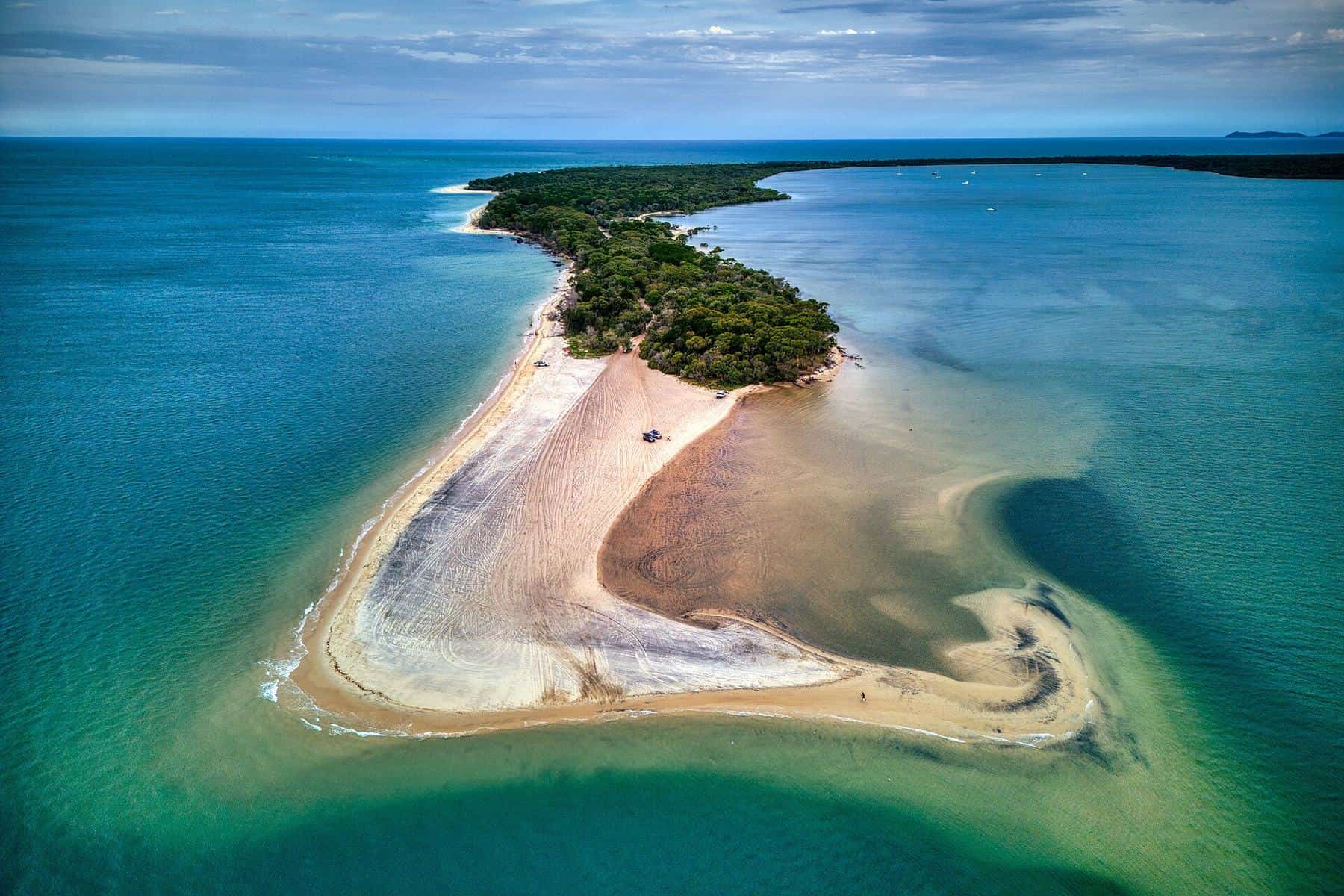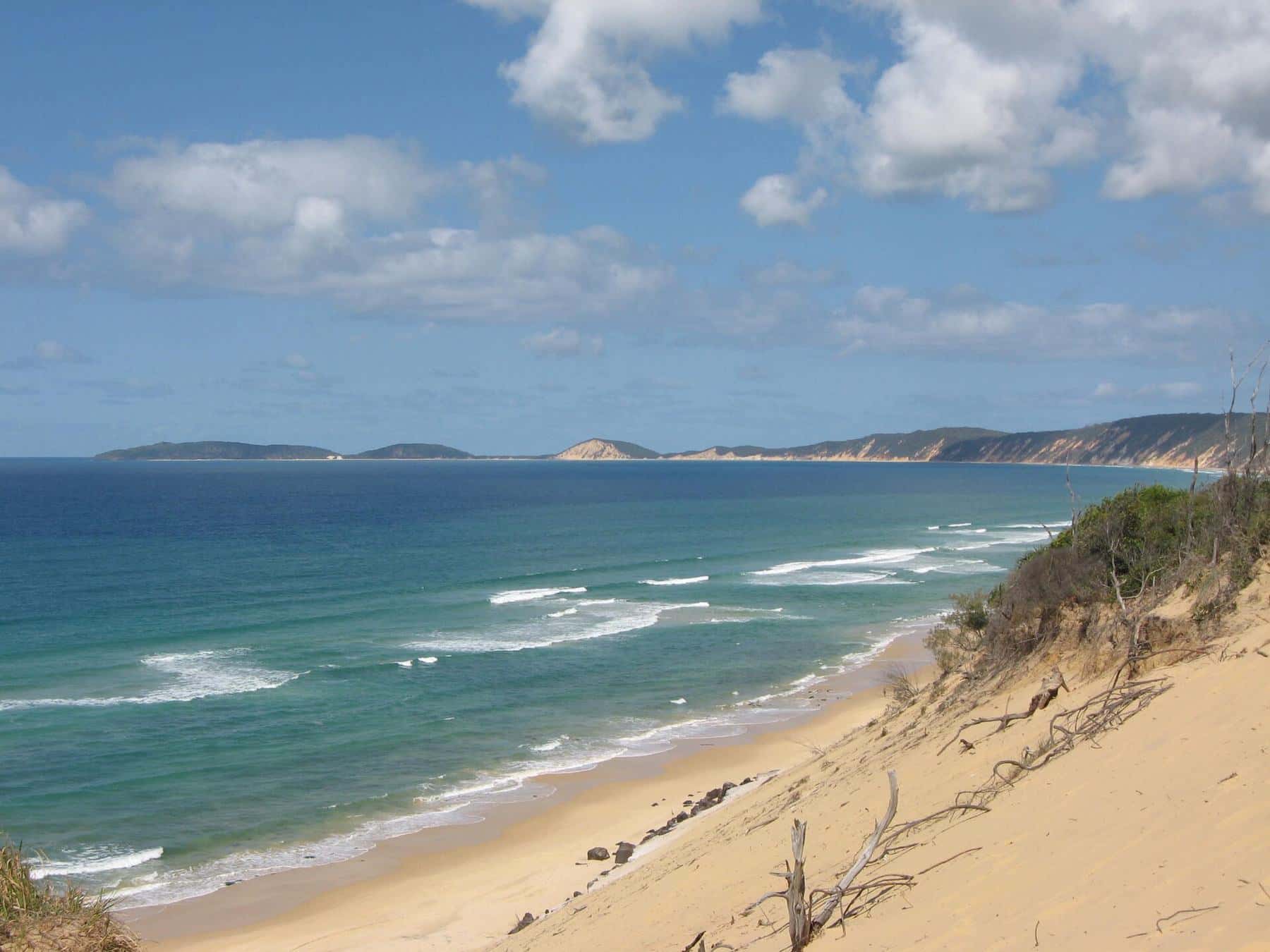
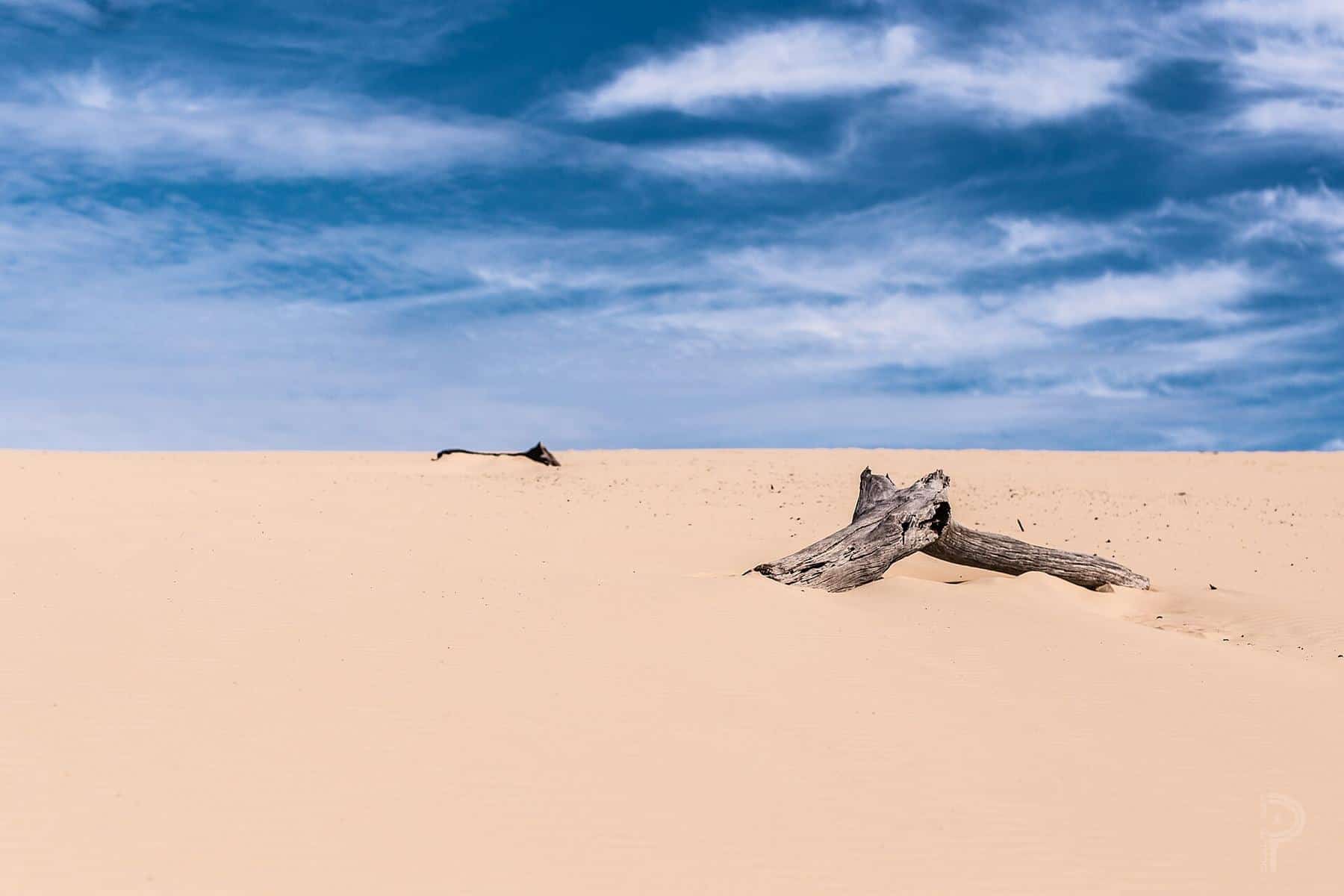
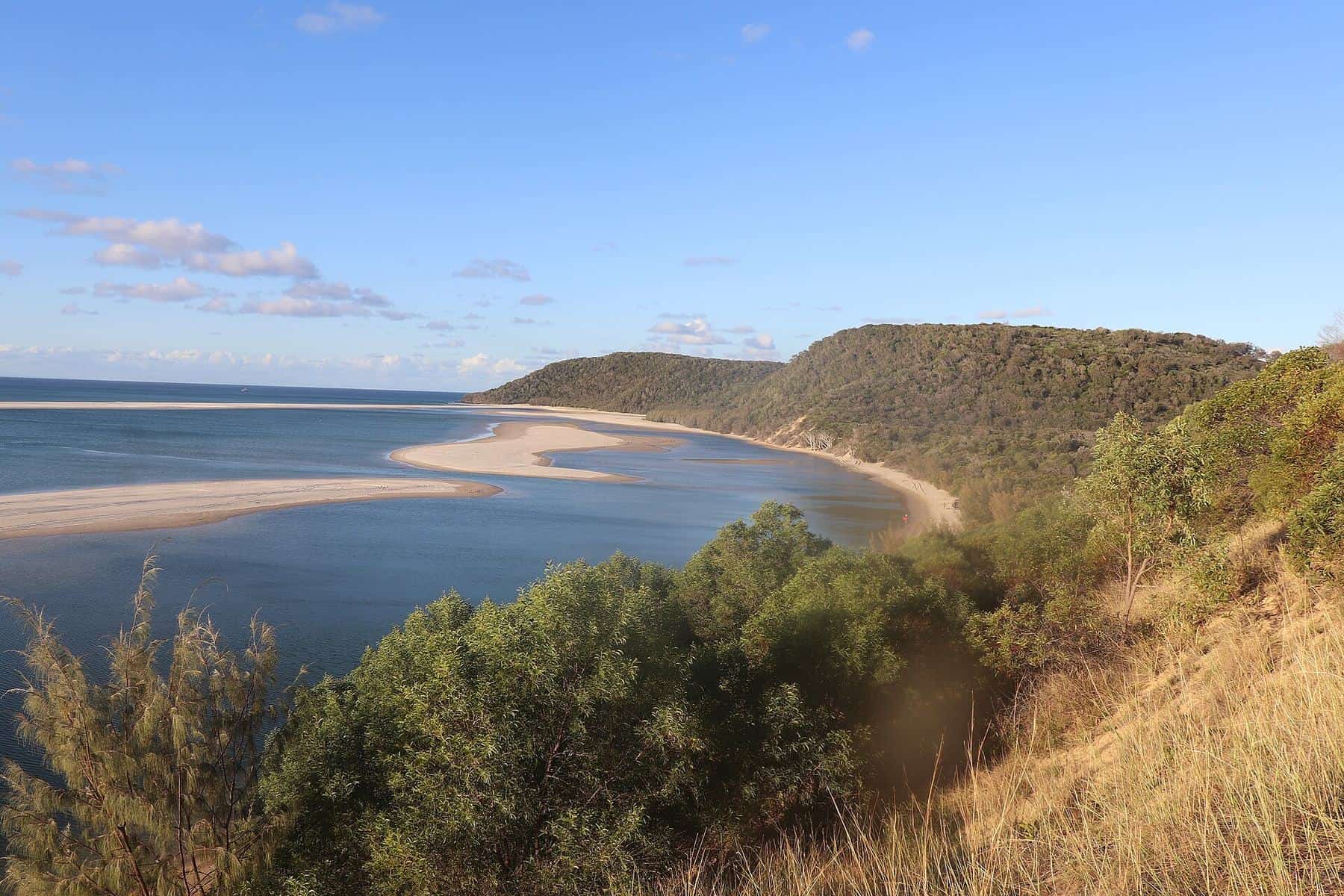
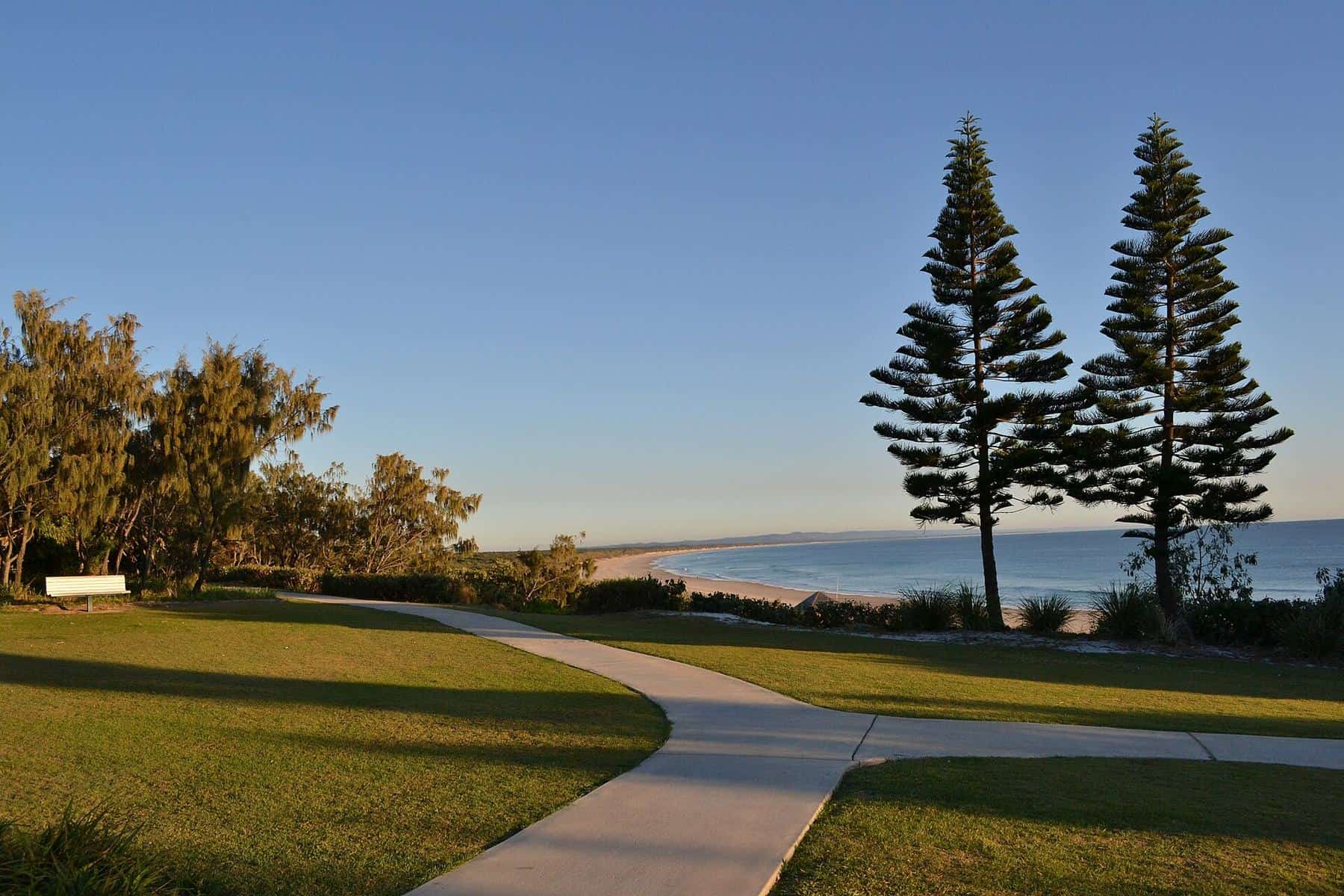
Rainbow Beach is one of those places that seems too small for everything around it. The town itself has only around 1,200 permanent residents, a short main street of cafés and surf shops, and a patrolled beach in front of the surf club. But step outside it and you are in one of the great sand landscapes of the world: the Cooloola sand mass to the south, the Great Sandy Strait to the west and, across a ten-minute barge ride from Inskip Point, K’gari, the world’s largest sand island.
Our Rainbow Beach is an independent guide to this stretch of the Queensland coast. We explain where to go, how to get there safely, what the permits and tide rules mean in practice, and the stories behind the places. Every guide is checked against official and authoritative sources, from Queensland Parks and Wildlife Service to the state heritage register, and we link to them so you can confirm details before you travel.
What makes Rainbow Beach special
Most beach towns offer sand and surf. Rainbow Beach adds a landscape that changes colour by the hour.
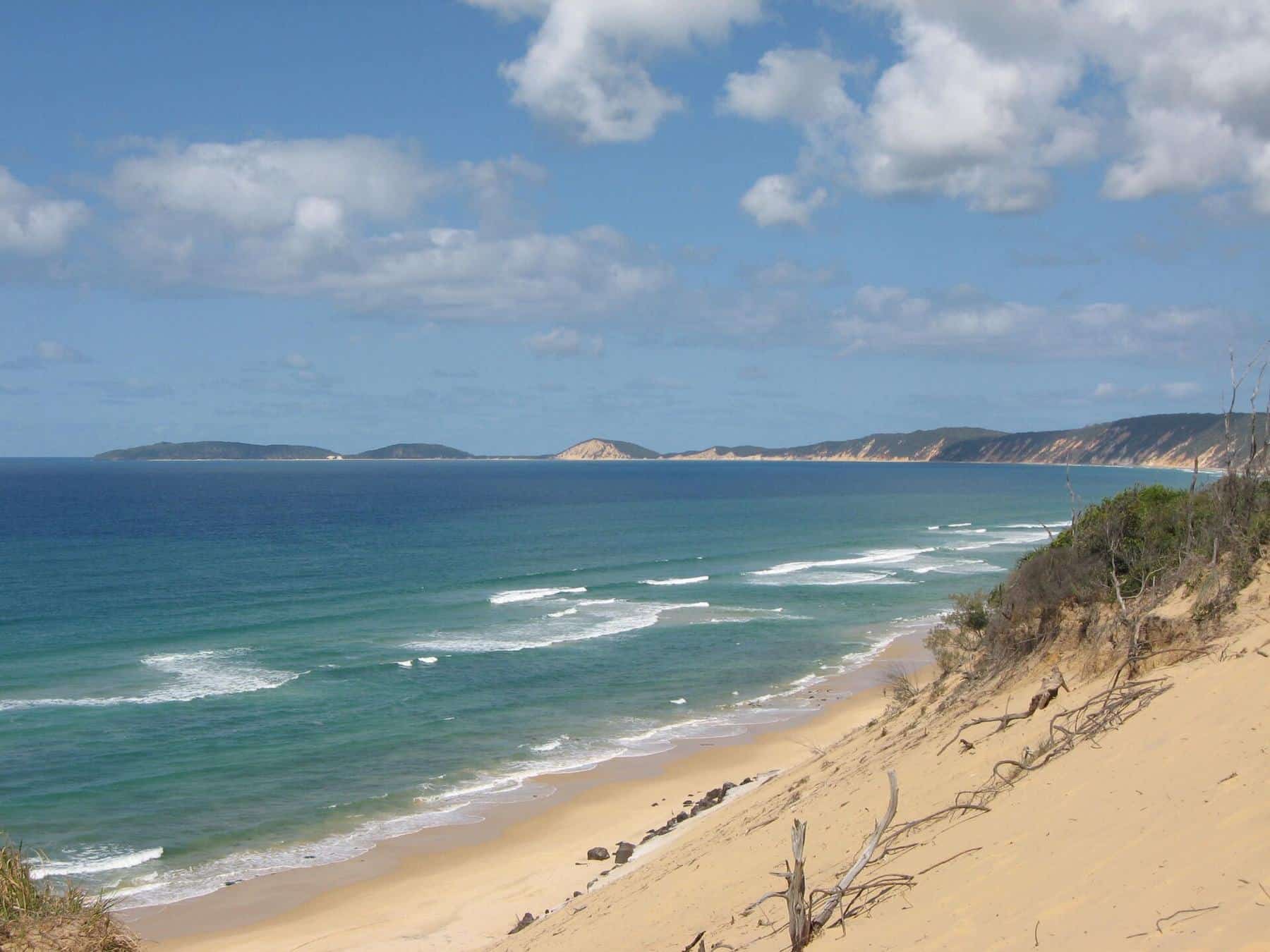
- The coloured sands. South of town, cliffs of sand rise as high as about 80 metres above the beach, banded in reds, ochres, creams and greys. Local visitor information counts as many as 72 shades. They are best seen on foot at low tide. Read our coloured sands guide.
- Carlo Sandblow. A 15-hectare bowl of open sand perched on the ridge above town, where people gather for sunset over Tin Can Bay and views south to Double Island Point. See Carlo Sandblow.
- Double Island Point. A rocky headland crowned by an 1884 lighthouse, with a sheltered lagoon on its northern side and some of the longest point breaks in Queensland. You reach it along the beach by 4WD. See Double Island Point.
- K’gari. The barge from Inskip Point puts you on the southern tip of the World Heritage-listed island in minutes. See our K’gari guide.
- Wildlife. Wild Australian humpback dolphins visit Tin Can Bay, humpback whales pass offshore in winter and spring, and divers come from around the world to see grey nurse sharks at Wolf Rock.
A town built on sand, in more ways than one
The Kabi Kabi people are the Traditional Owners of the land around Rainbow Beach and the Cooloola Coast, and their stories of the coloured cliffs are still told. European settlement came late. For decades the only access was along the beach from Noosa or via forestry tracks. That changed in the 1960s when a company called Queensland Titanium Mines began mining the heavy mineral sands, rich in rutile, ilmenite and zircon. The miners paid for much of the road and power line, and Rainbow Beach was gazetted as a township in 1969. Mining and processing ran from 1965 to 1976. Today the town lives on tourism, and the national park that surrounds it protects most of the coast. Read more in our Rainbow Beach history.
Planning your visit
Getting there. Rainbow Beach is about a three-hour drive north of Brisbane. Take the Bruce Highway to Gympie, then follow the Tin Can Bay and Rainbow Beach roads. There is no train to the town, but coach and shuttle services connect it with Gympie, Noosa and Brisbane. See our travel guide.
Getting around. You can explore the town, the main beach, Carlo Sandblow and Tin Can Bay in any car. To drive the beach south to Double Island Point and Noosa, or north across to K’gari, you need a high-clearance four-wheel drive, a vehicle access permit from Queensland Parks and Wildlife Service and a good understanding of tides. Our beach driving guide explains it all, and our tide-window planner helps you time your trip.
How long to stay. Two or three days lets you walk the sandblow, visit the coloured sands, take a tour to Double Island Point and spend a morning in Tin Can Bay. Add a day or more if you plan to camp at Inskip or cross to K’gari.
Things to do around Rainbow Beach
Our things to do hub covers the full list. Highlights include:
- Walk to Carlo Sandblow for sunrise or sunset. It is about 600 metres from the car park.
- Walk the beach to the coloured sands at low tide, about two kilometres south of the surf club.
- Take a 4WD tour or drive yourself to Double Island Point, climb to the lighthouse and swim in the lagoon.
- Dive Wolf Rock if you are an experienced diver. It is one of Australia’s best-known grey nurse shark sites.
- See the dolphins at Tin Can Bay, where a regulated feeding program has run for decades.
- Hike part of the Cooloola Great Walk, a 102-kilometre trail that starts at the Carlo Sandblow car park.
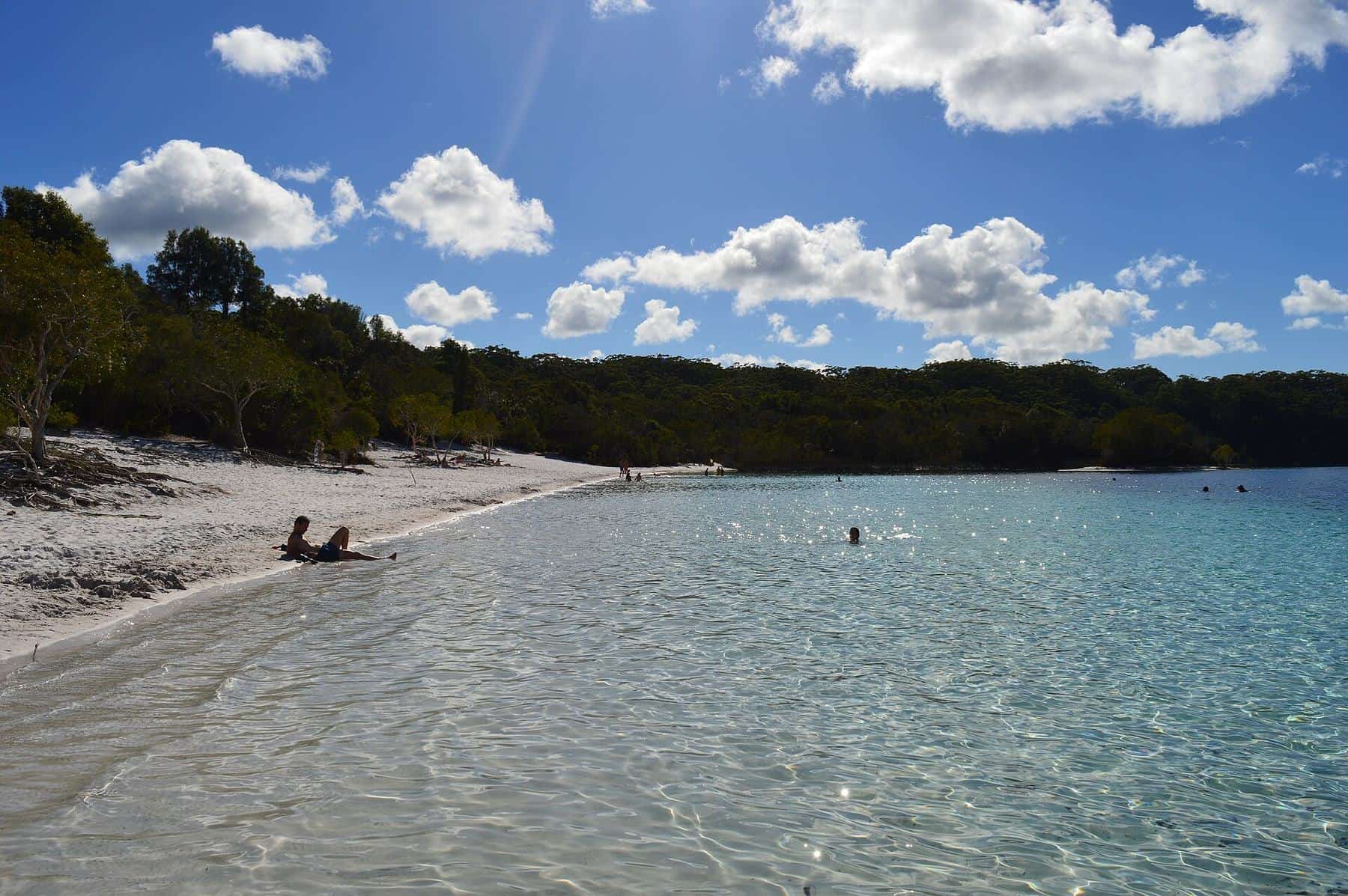
- Cross to K’gari for lakes, rainforest and the SS Maheno shipwreck.
Safety first
The Cooloola Coast is beautiful but unforgiving. Swim only at patrolled beaches between the flags. On the beach, give way to pedestrians, keep to the speed limits and travel around low tide. At Inskip Point and on K’gari, follow the advice about wongari (dingoes): keep children within arm’s reach, never feed them and secure all food. Check QPWS park alerts before any beach or national park trip.
About this guide
The ourrainbowbeach.com.au address was once used by the local commerce and tourism association. That site went offline, and this independent guide was relaunched in 2026. We are not connected to that association, to Queensland Parks and Wildlife Service, to the council or to any business. Nobody pays to appear here. Read about us and our editorial policy, or contact us with a correction or a local tip.